MYTHOPIA
Valais, Switzerland
Doomed to Liberty: How Domaine Mythopia Rewrote the Rules of Wine
High in the craggy alpine slopes of Arbaz in Valais, Switzerland, perched at an altitude of 1,200 meters, lies Domaine Mythopia. To call it a winery is a misnomer; it is a radical live experiment in unbridled biodiversity, extreme patience, and uncompromising philosophy. Founded by Hans-Peter Schmidt and his wife Delphine Brooks, Mythopia stands as one of the most singular operations in the world of fine wine. Here, conventional rules of commercial viticulture are not merely bent—they are entirely cast aside.
The Science Behind the Wildness
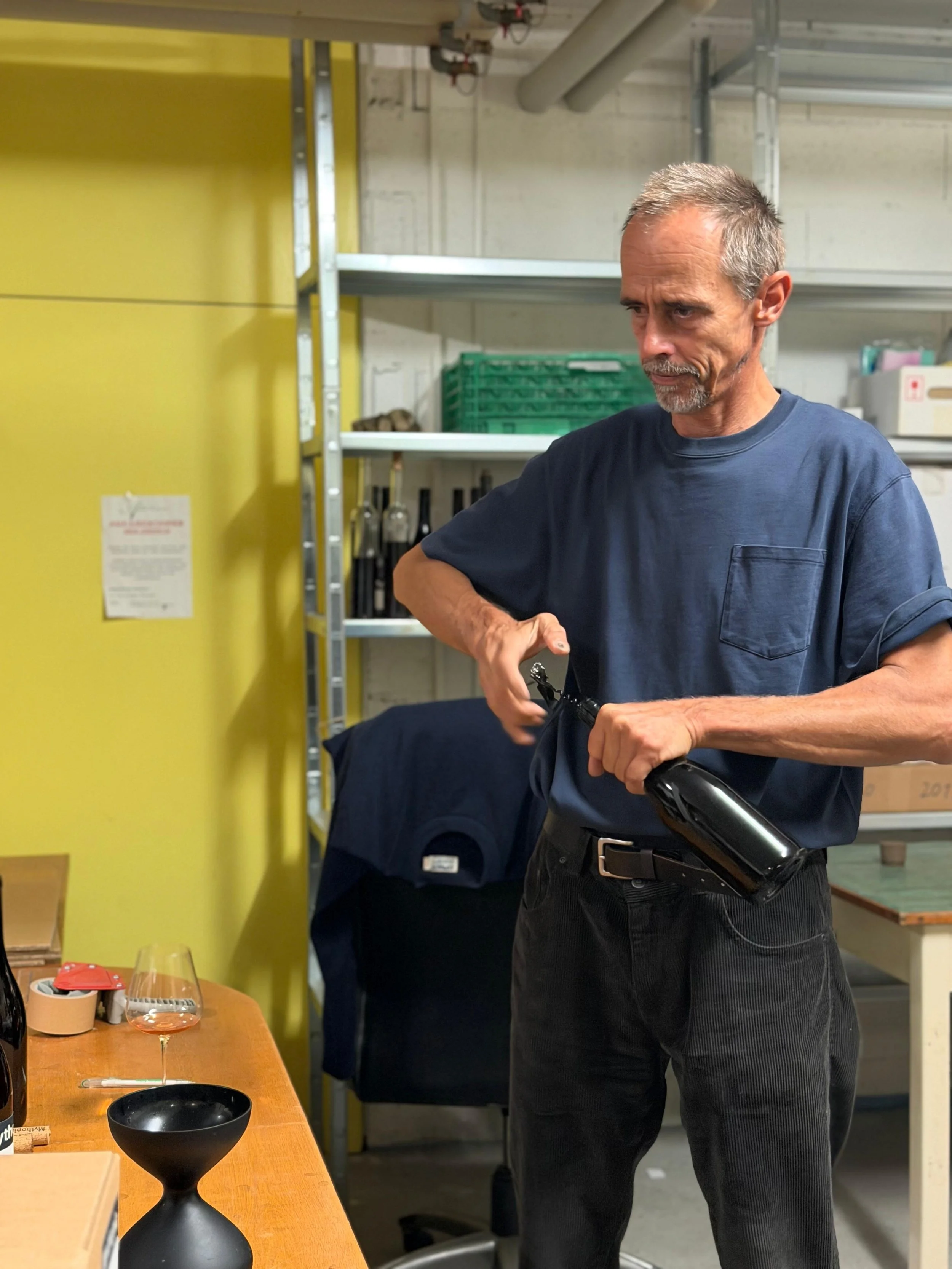
To understand why Mythopia exists, one must look outside the vineyard. Hans-Peter Schmidt works completely alone without a single employee on staff. Wine production is not his primary livelihood, nor was it ever designed to turn a commercial profit or pay his daily expenses.
Schmidt’s primary vocation is as a renowned environmental scientist specializing in agronomy, soil chemistry, and carbon sequestration. He serves as the Director of the Ithaka Institute for Carbon Strategies, a global open-source research hub based in Switzerland with research arms extending to Nepal, Germany, and the United States. His scientific work focuses on pioneering biochar applications and carbon-negative agricultural models to combat global climate change.
Mythopia, therefore, serves as his living laboratory. It is a passion project built to push natural viticulture to its ultimate physical boundaries, proving that world-class wine can be produced with zero human coercion when a vigneron is freed from the burden of profitability.
Viticulture Without Intervention: Letting Nature Run Wild
Unlike standard organic or biodynamic estates that still require intensive tractor passes and sulfur or copper spraying regimes, Mythopia practices true non-intervention in the soil. Vines are pruned exactly once during the winter, and once spring arrives, they are left to grow completely unchecked. Without hedging or trimming the apex, the vines behave as wild lianes, developing much like climbing plants in an old-growth forest.
There is no tilling of the dirt, no chemical or natural treatments applied during the vegetative cycle, and no human labor cluttering the rows throughout the year. The vine canopy naturally balances itself, creating dense foliage that protects the fruit against extreme heat and summer droughts while fostering a rich micro-climate of wild flora, herbs, and beneficial insects.
The financial risk of this hands-off approach is severe. Without protective treatments, fungal diseases like mildew can sweep unchecked through the estate during difficult vintages. Yields average an extraordinarily low two to three hectoliters per hectare, and in wet years, the harvest can drop to absolute zero. Because Schmidt does not rely on the estate to pay his bills, he accepts these total annual losses without compromise.
High-Altitude Fermentation and Sub-Zero Winters
When harvest arrives, the entire operation remains strictly artisanal, as Hans-Peter and Delphine pick all the grapes themselves. The harvested fruit is placed into open-windowed cement tanks in tiny garage structures located right in the middle of the vineyards at 1,200 meters altitude. Exposed to the raw alpine elements, the fermentation begins at a glacial pace and stretches across the entire winter.
During these high-altitude winters, ambient temperatures inside the stone structures regularly plunge well below freezing. This thermal shock is entirely intentional. Schmidt wants his wines to forge an unbreakable structural backbone that allows them to withstand decades of age without spoiling. After enduring months of sub-zero temperatures, the tanks naturally warm up as spring arrives, allowing wild yeasts to finish fermentation organically before the wine is moved down into his cellar in Sierre at the valley floor.
Decades in Barrel: The Power of the Voile
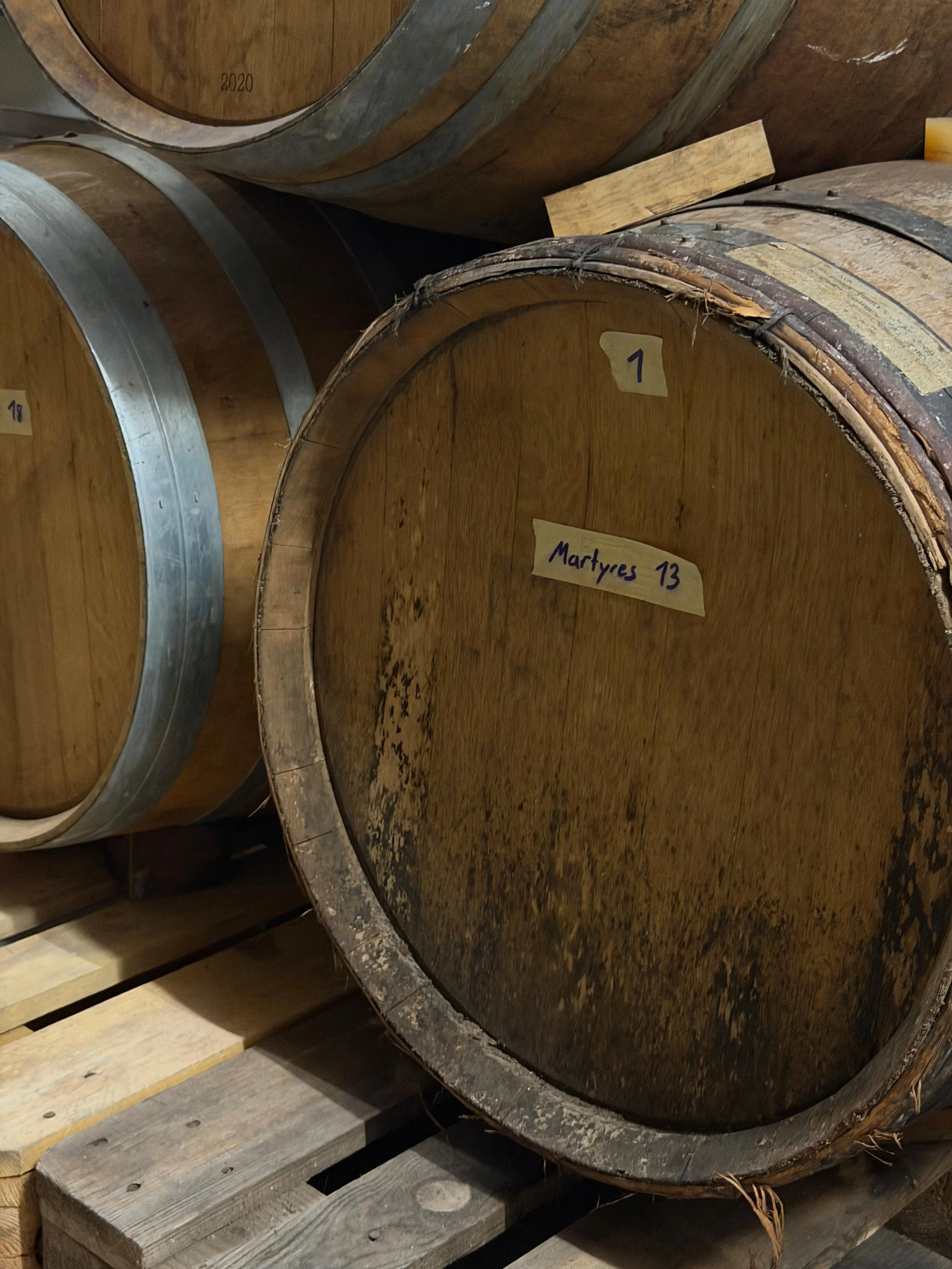
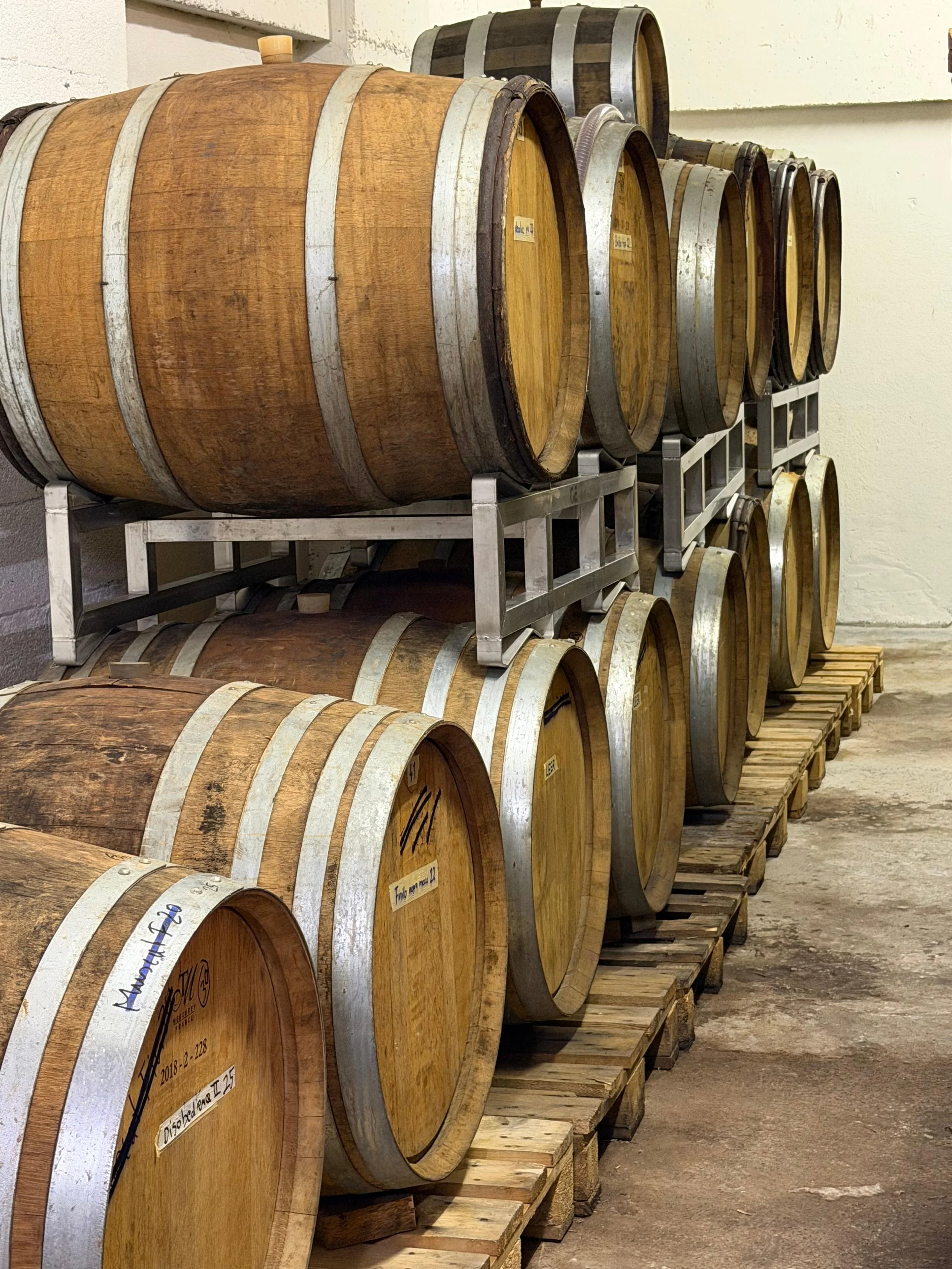
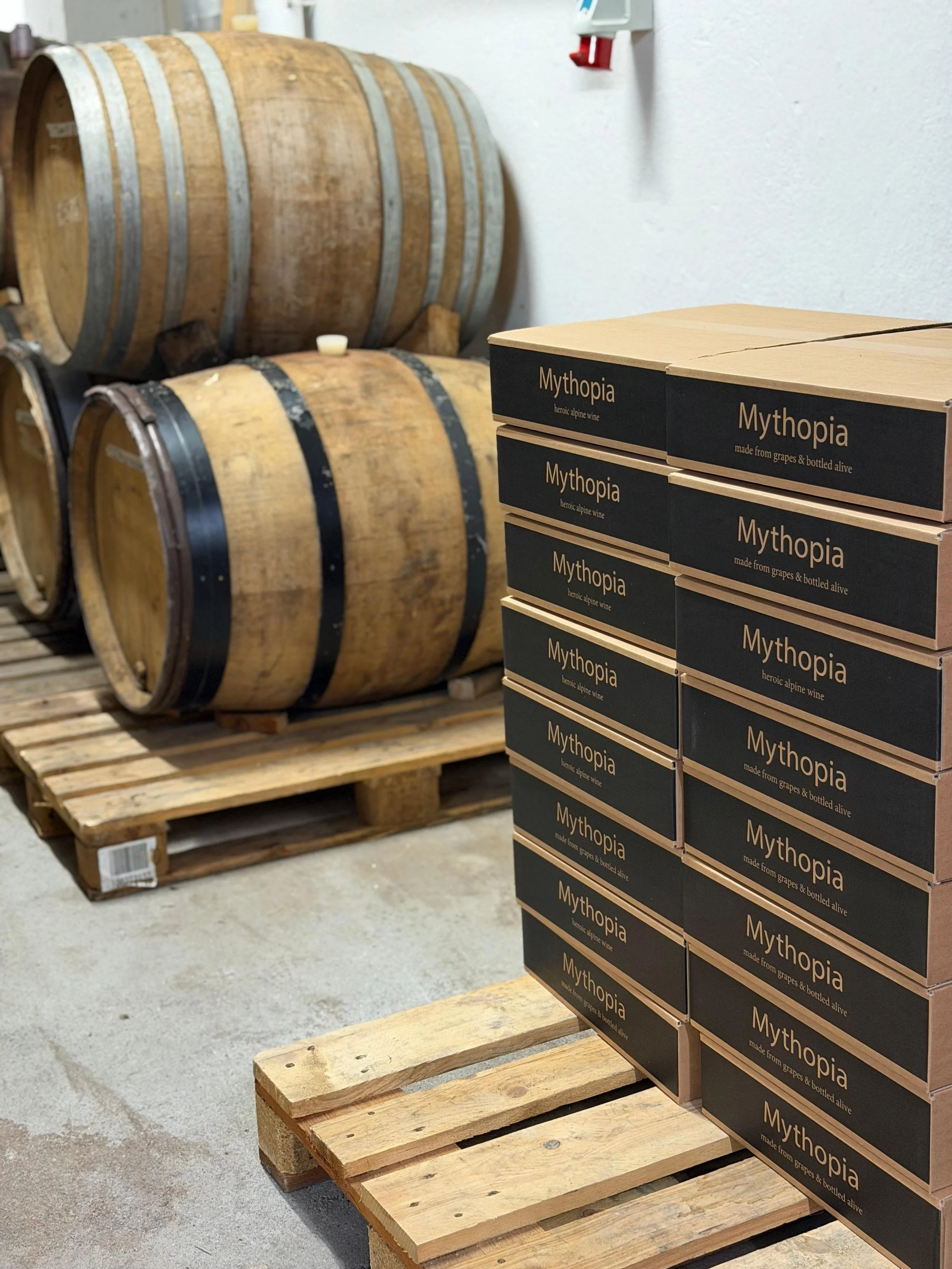
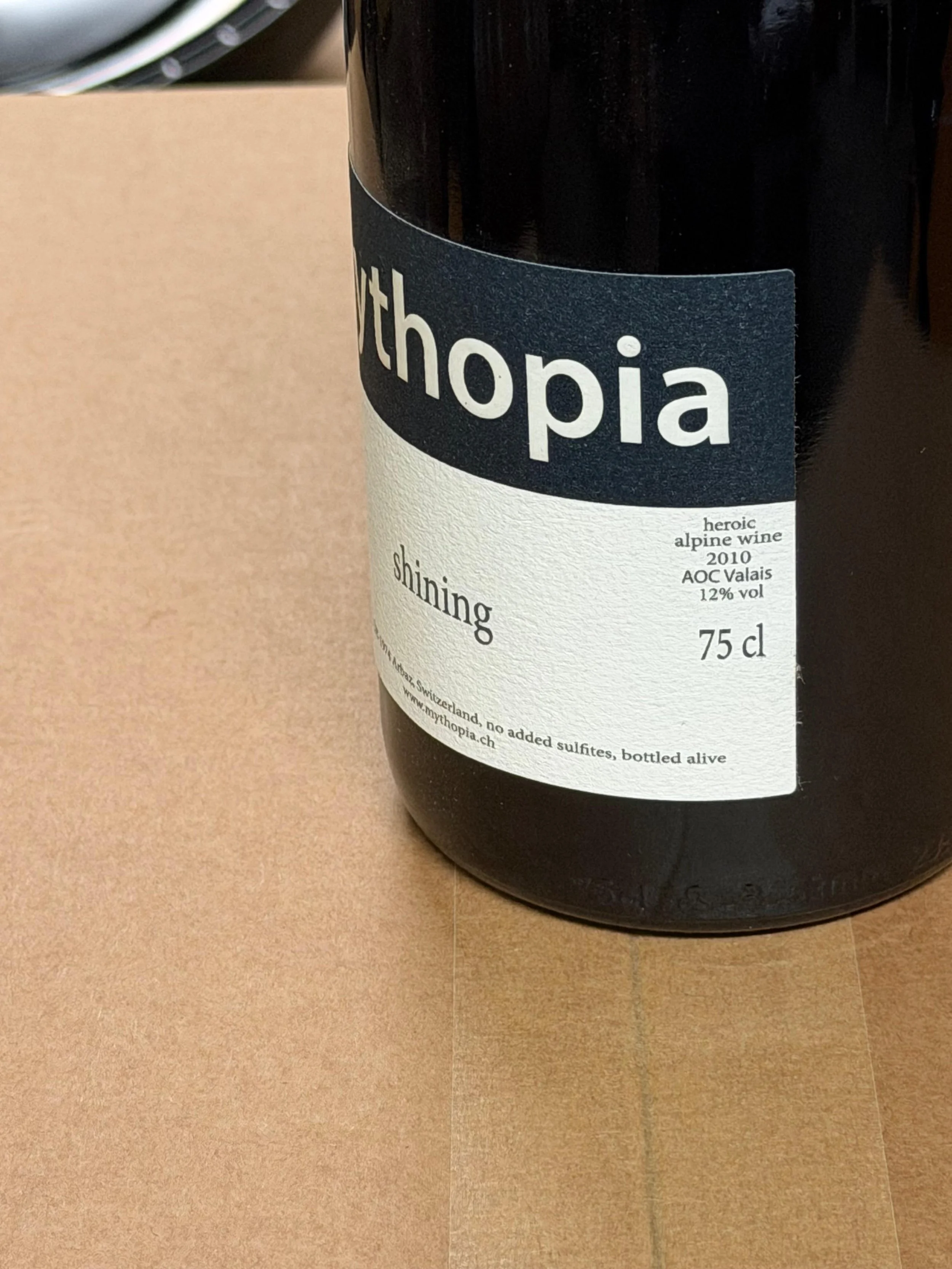
Once the wine arrives in Sierre, it enters an extended maturation process in very old French oak barrels. While standard fine wines age for 12 to 24 months, Mythopia wines spend an average of six to eight years in barrel, with many casks left untouched for over a decade. As a striking example, the 2010 vintage of Mythopia Shining was only bottled and released in 2026, sixteen full years after harvest.
Because the barrels are left completely untouched without topping up, natural evaporation over six to ten years leaves the casks nearly half empty. In response to this air gap, a thick, protective yeast veil—a voile, similar to the flor found in Jura’s rare Château-Chalon wines—forms over the liquid, insulating the wine against harsh oxidation while developing deep secondary complexity.
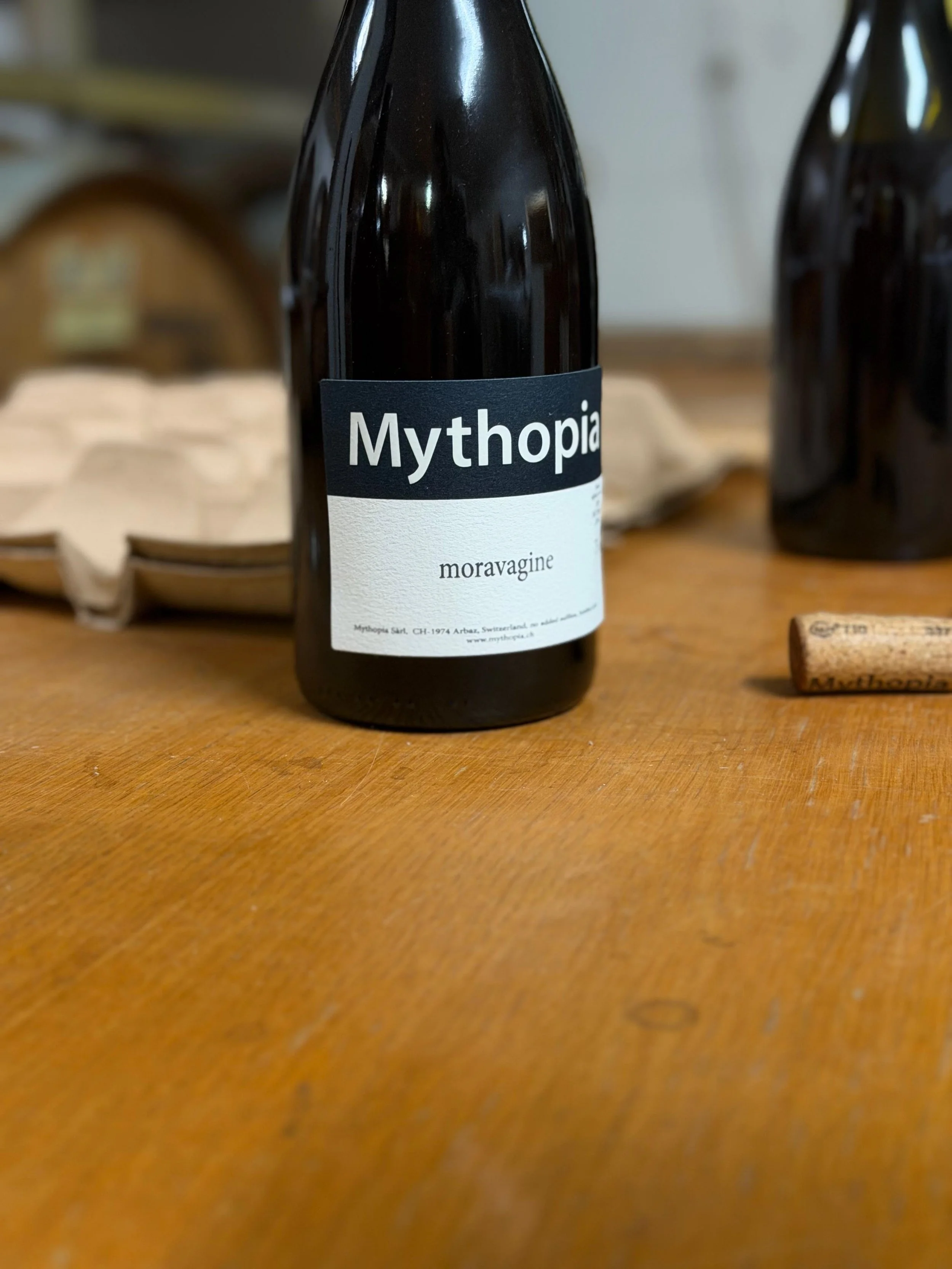
Hans-Peter never breaks the veil unnecessarily, tasting each cask only once every one or two years. Because every individual barrel possesses its own unique wood porosity and micro-oxygenation rate, two casks filled with Pinot Noir from the exact same vineyard plot, harvested on the exact same day, will evolve on completely different timelines. A barrel that matures faster and yields a supple profile might be bottled early as Moravagine, while a neighboring barrel from that same harvest that demands years of further maturation eventually becomes Blue Velvet.
Domaine Mythopia represents a rare convergence in winemaking where pure scientific curiosity operates unburdened by commercial pressure. By allowing alpine nature to dictate every step—from sub-zero winter fermentations to decade-long barrel maturations under a protective veil—Hans-Peter Schmidt crafts living, indestructible wines that capture the raw, untamed spirit of the Valais.
Distributed exclusively in Hong Kong and Macau by Souveraine Limited
THE WINES
- BLUE VELVET: 100% Pinot Noir
Blue Velvet is one of Domaine Mythopia’s most famous, iconic, and sought-after red wines—a pure Pinot Noir that captures the wild, high-altitude alpine spirit of Hans-Peter Schmidt's vineyards under the Ayent castle in Arbaz
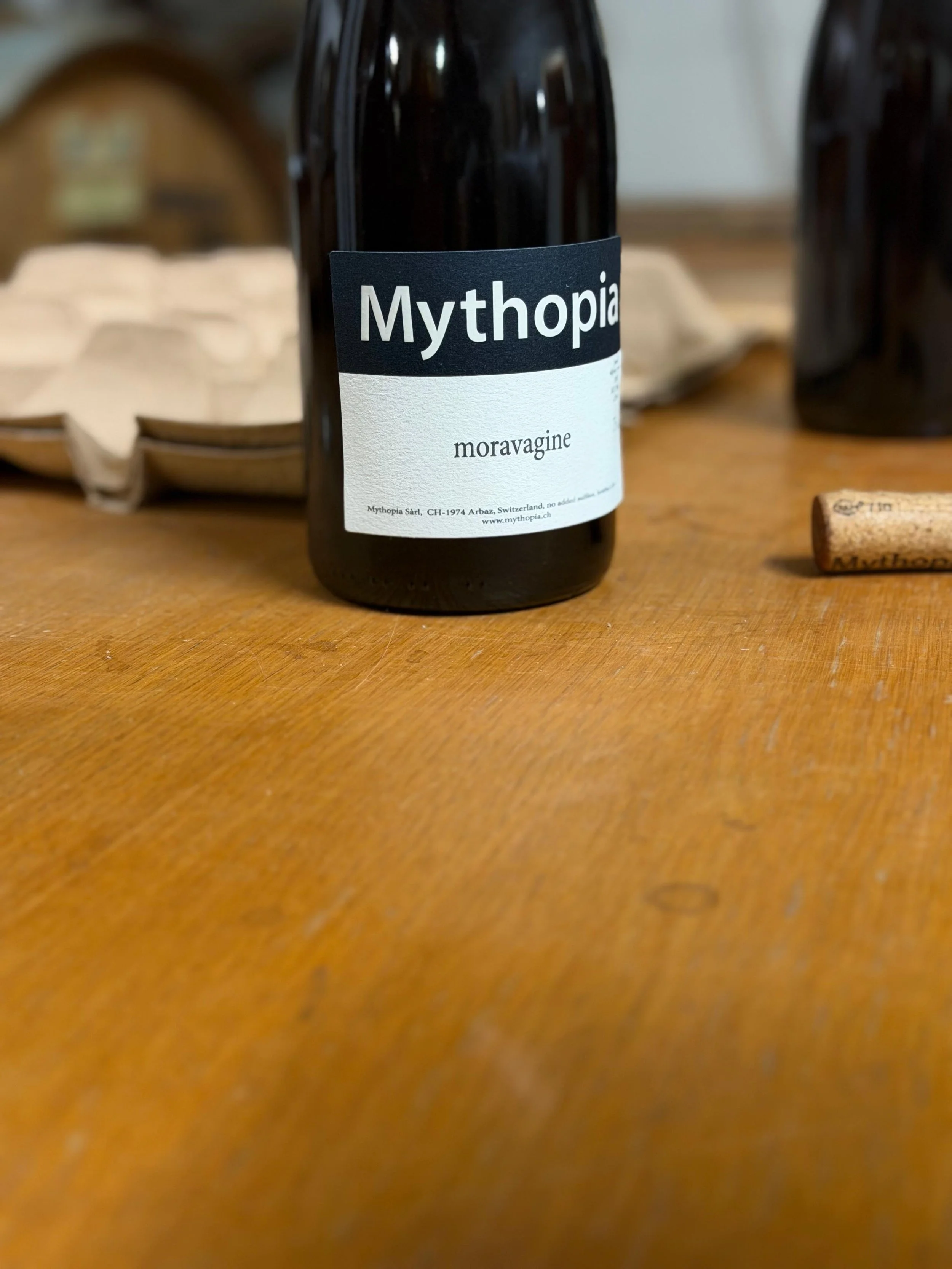
- MORAVAGINE: 100% Pinot Noir
Moravagine, the iconic 1926 modernist novel by Swiss author Blaise Cendrars—a dark, wild, and untamed anti-hero story that mirrors the fierce, uncompromising spirit of the wine.
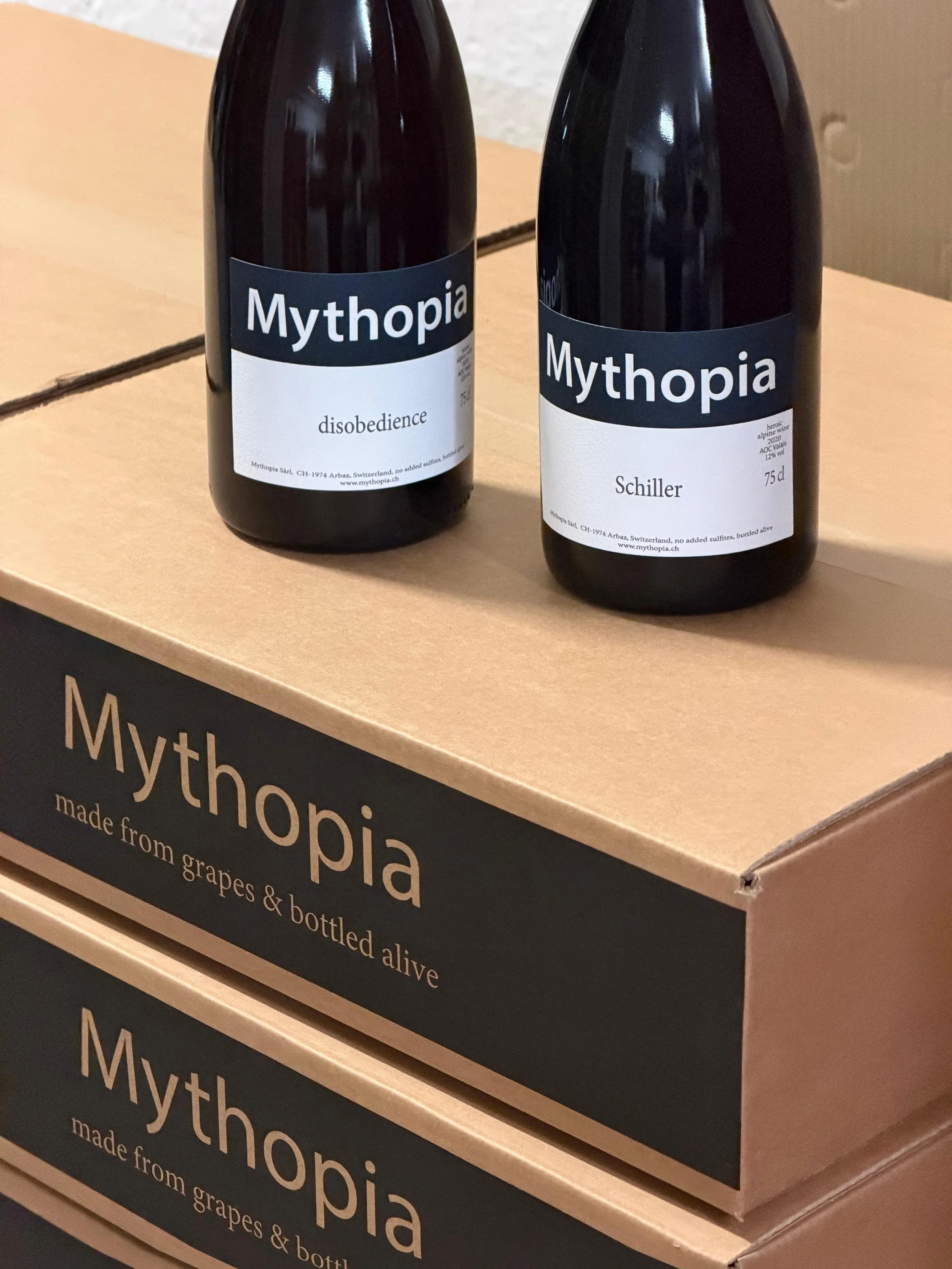
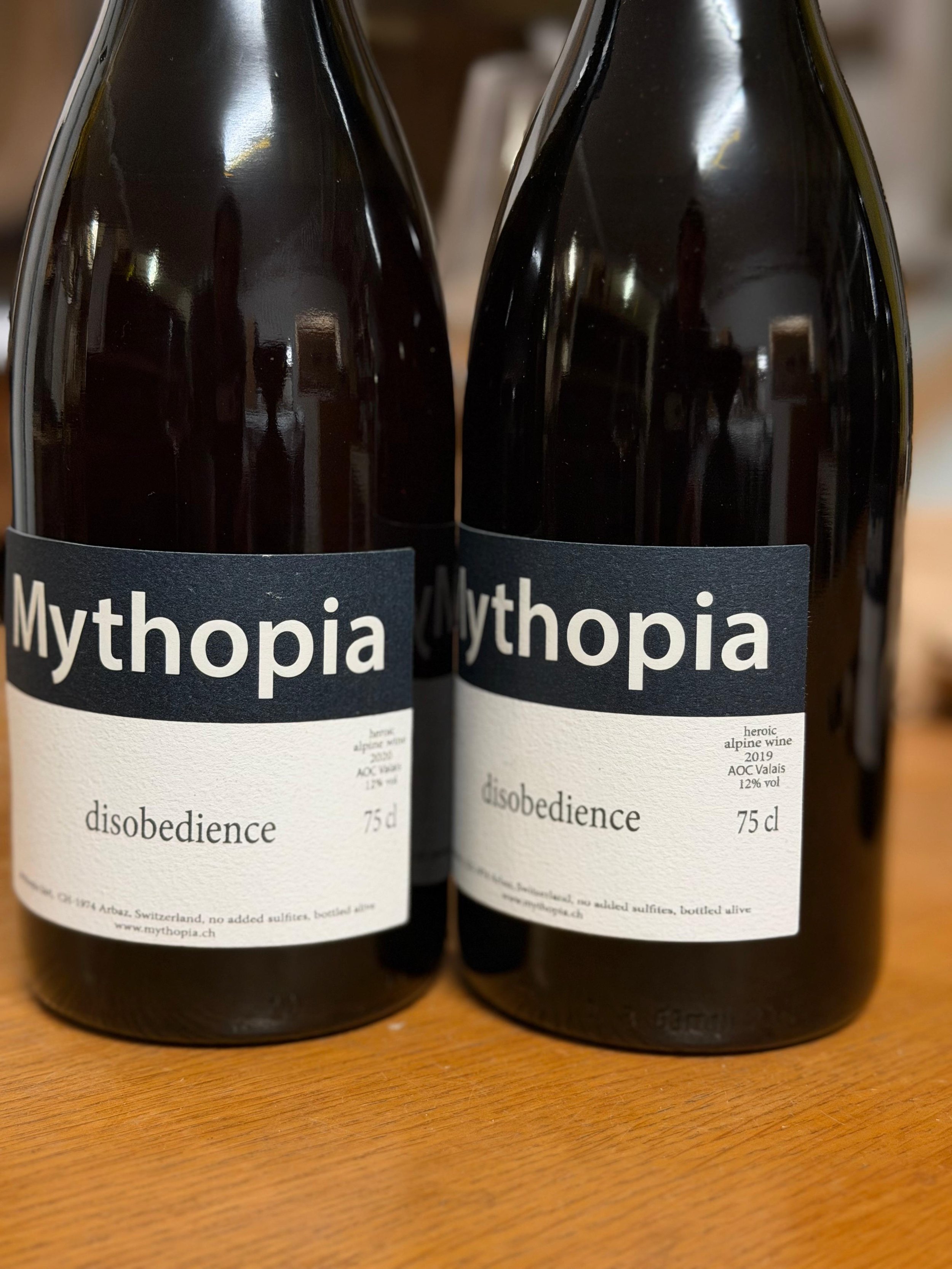
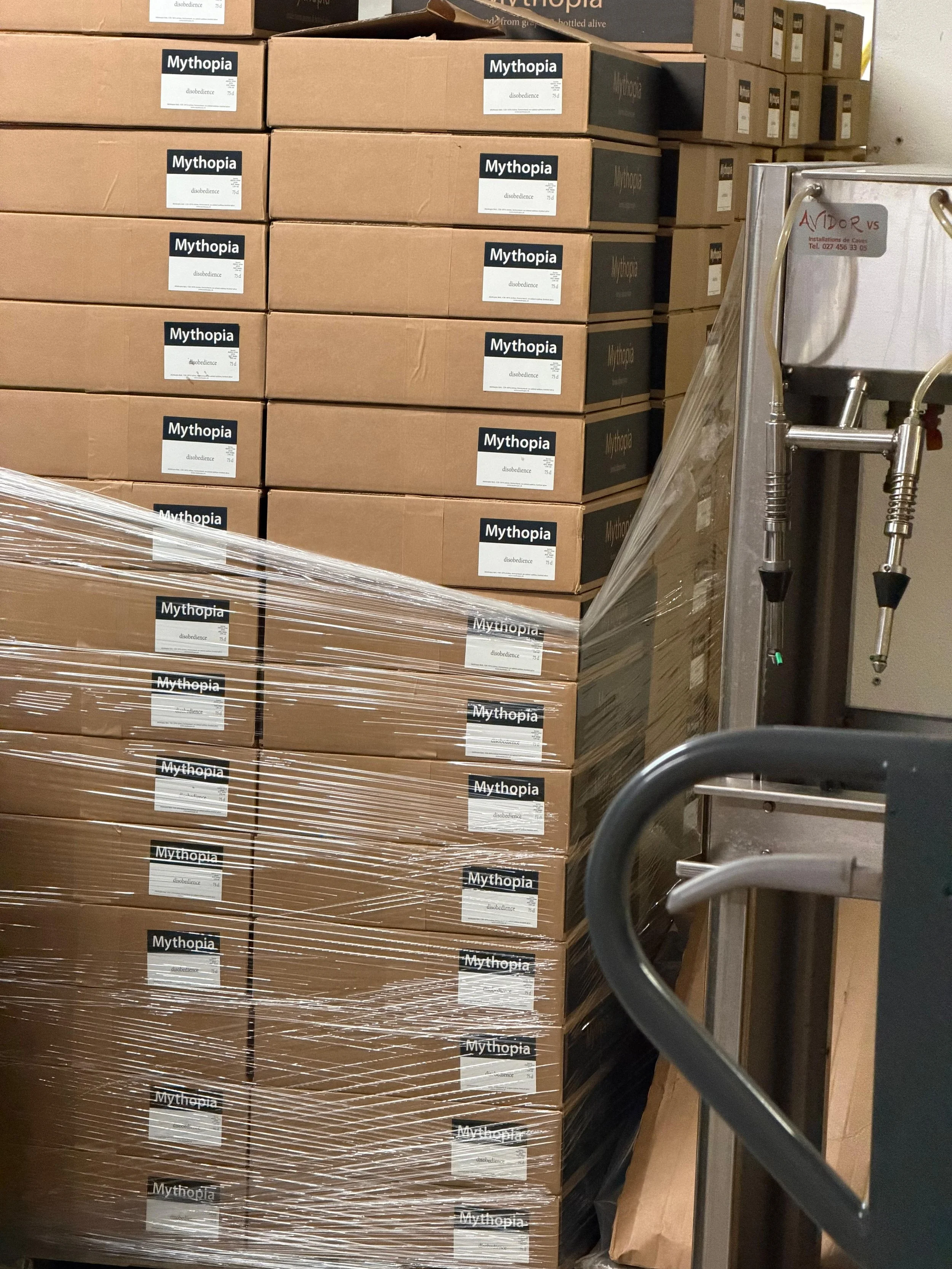
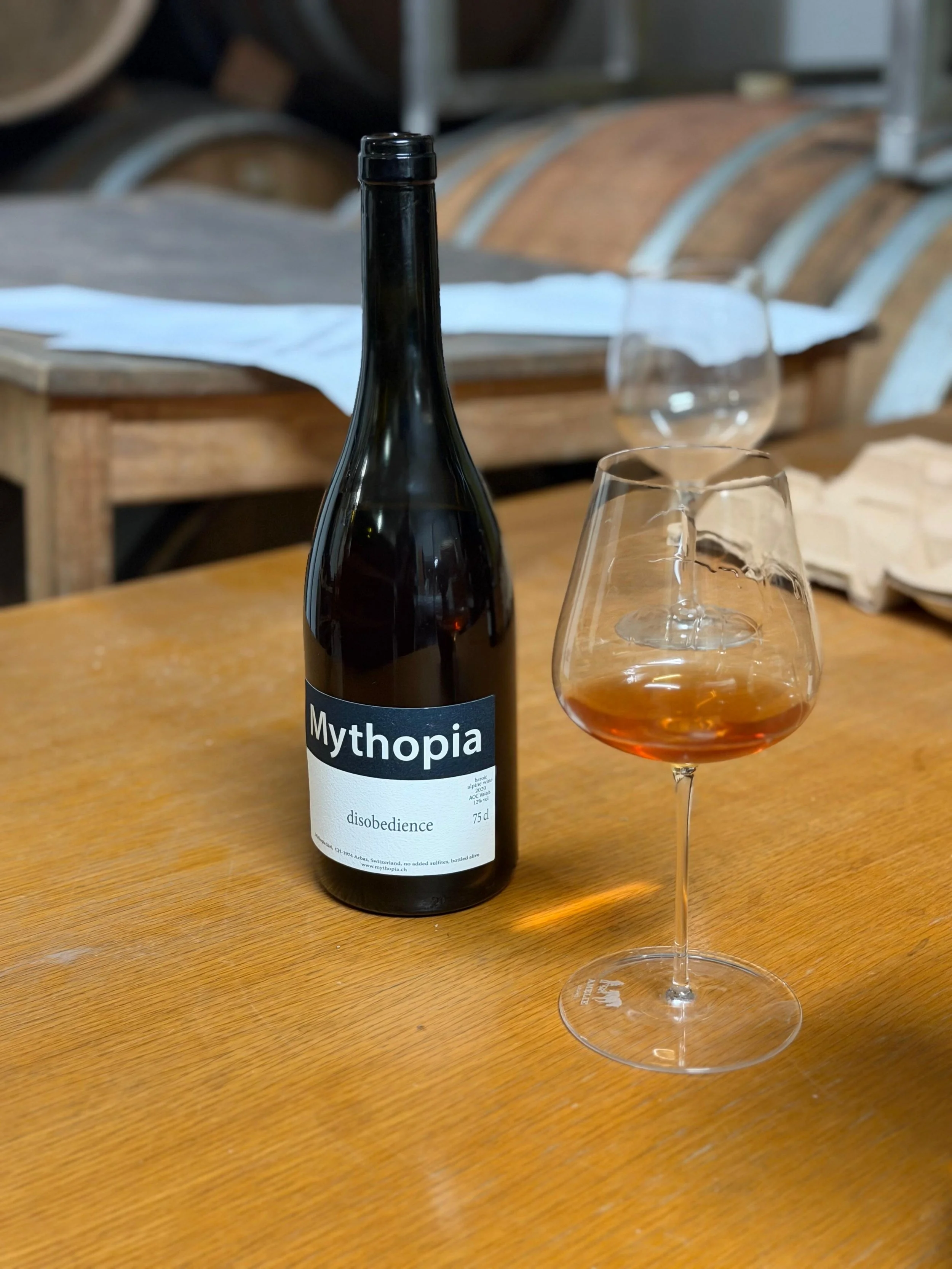
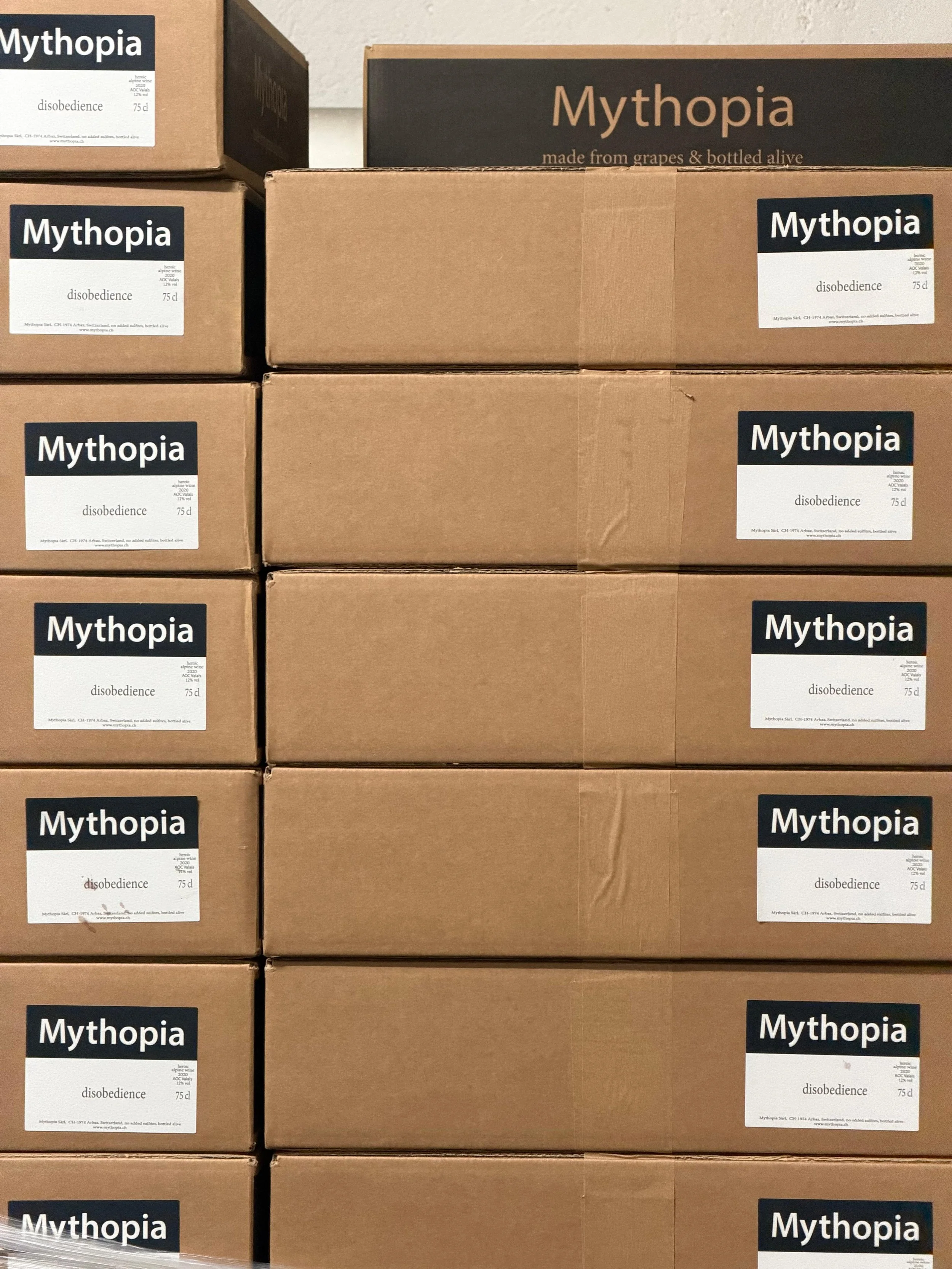
- DISOBEDIENCE: 100% Chasselas (Fendant). His orange wine.
Hans-Peter Schmidt renamed the wine Disobedience in 2009 as an homage to Henry David Thoreau’s essay Civil Disobedience.
The name reflects its rebellion against conventional winemaking rules. In Switzerland, Chasselas/Fendant is traditionally made into a delicate, clear, quick-drinking white wine. Schmidt deliberately breaks academic and regional norms by treating the grape with extended skin contact and years of barrel aging—demonstrating that Fendant can achieve deep structure and complexity when freed from traditional constraints.
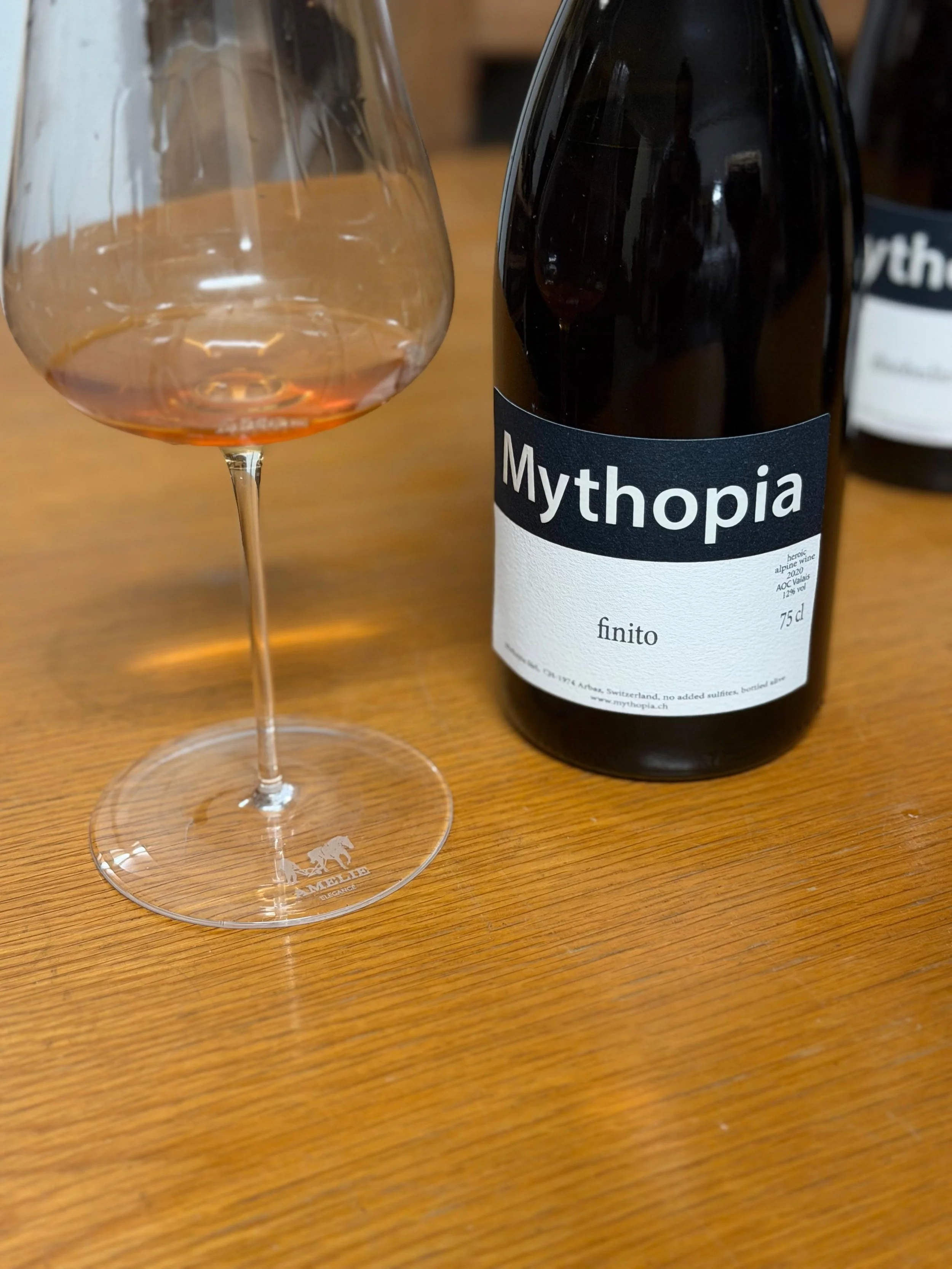
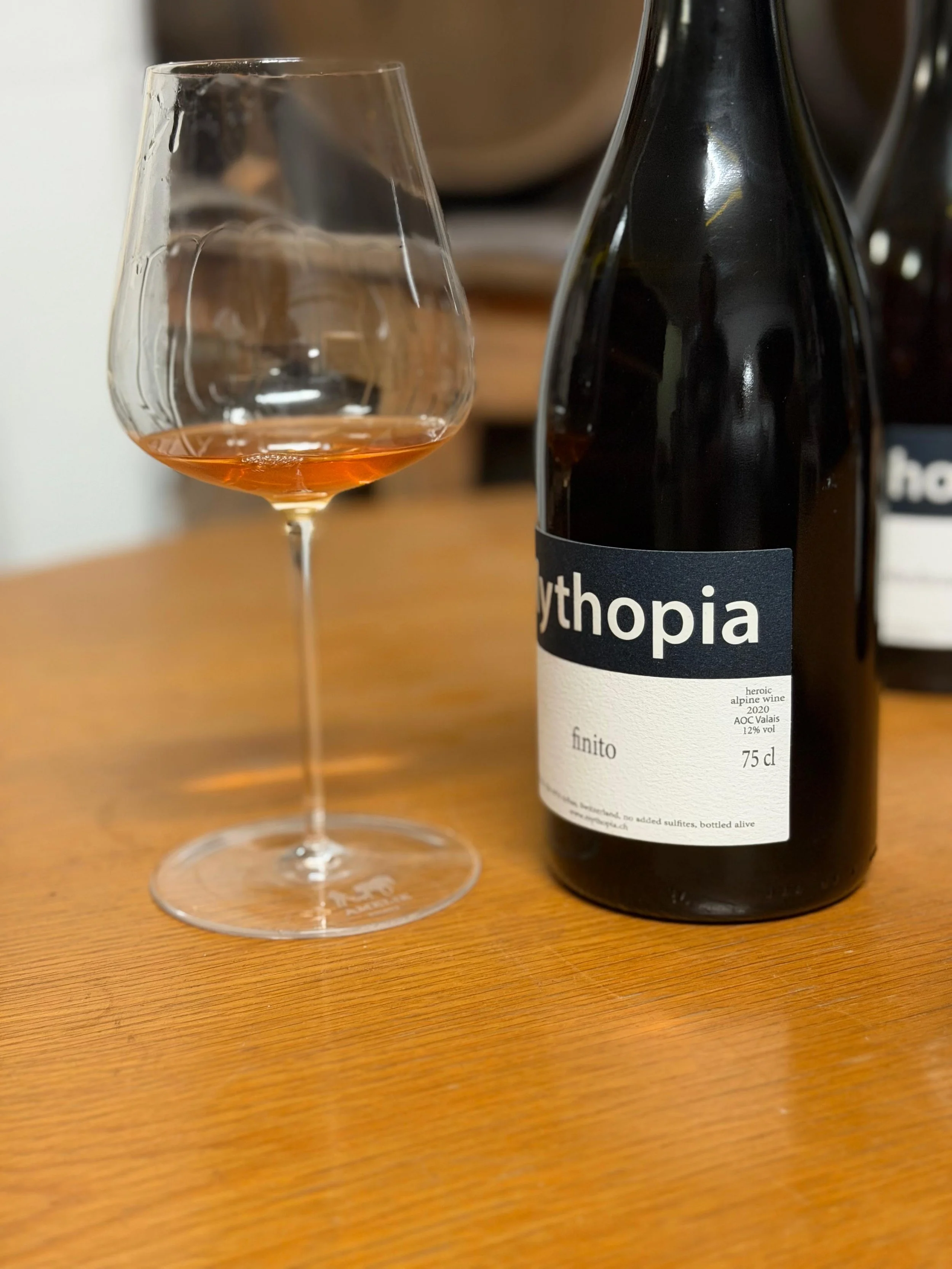
- FINITO: 100% Pinot Noir
In Italian and Spanish, finito means "finished" or "done." During a particularly wet vintage, fungal disease (mildew) swept through Hans-Peter Schmidt’s untreated vineyard rows, wiping out nearly his entire crop. With almost no grapes left to pick, it looked as though the harvest was completely over before it had even begun. Instead of abandoning the vintage, Schmidt hand-picked the tiny remaining handful of pristine, super-concentrated grapes that survived the outbreak. He named the resulting micro-cuvée Finito—a tongue-in-cheek reference to a vintage that everyone thought was finished.
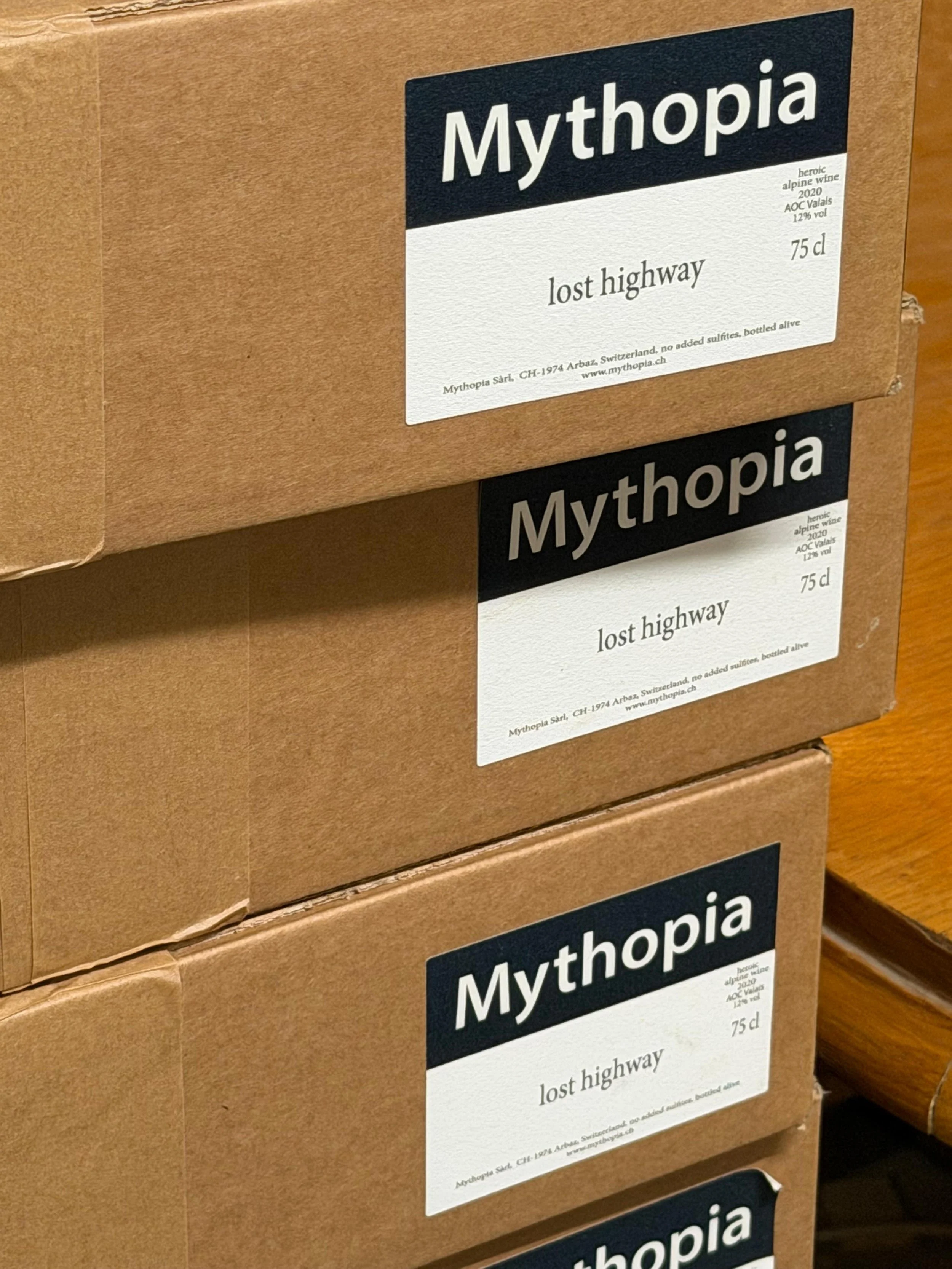
- LOST HIGHWAY - 100% Pinot Noir
it gets its signature identity from David Lynch-esque cinematic naming and Hans-Peter Schmidt’s radical, slow-aging winemaking.
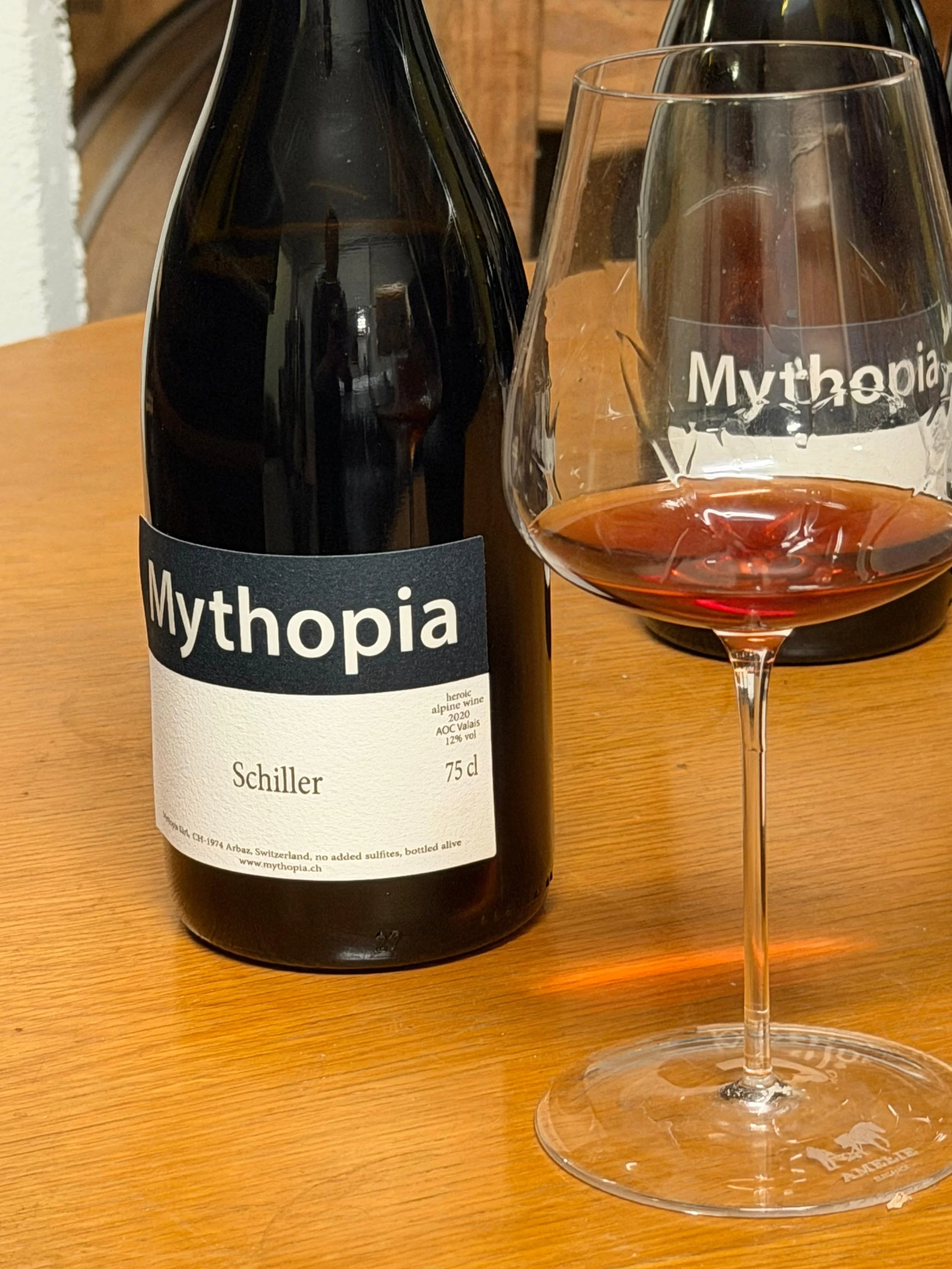
- SCHILLER: Blend of Pinot Noir and Chasselas (Fendant)
Schiller is Domaine Mythopia’s interpretation of the traditional Swiss/German style of Schillerwein—a wine made by co-fermenting red and white grapes together.
Historically in German-speaking wine regions (like Württemberg in Germany and parts of German-speaking Switzerland), Schiller refers to a field-blend style where red and white grapes are harvested, pressed, and fermented together. Wine with Seth. The name comes from the German verb schillern ("to shimmer" or "iridesce"), describing the wine’s striking, changing color—somewhere between a deep dark rosé, an orange wine, and a light red.
- ILLUSION: 100% Pinot Noir
As Hans-Peter Schmidt explains on the estate's philosophy: "We give a thousand reasons to explain what we do. Without Illusion we wouldn't succeed in anything... Illusion is what makes us wish to stay alive."
- SHINNING: 100% Pinot Noir. A Vins Jaune, but Red!
Shining is one of Domaine Mythopia's most extreme and legendary cuvées—a 100% Pinot Noir that undergoes up to a decade of barrel maturation, pushing oxidative aging to its absolute limit.
- T&T
T&T is one of Domaine Mythopia’s most unusual "special edition" cuvées—a bottle that sits right between their traditional high-altitude natural wines and their wild, experimental side.
Unlike Mythopia’s pure Pinot Noir cuvées (Blue Velvet, Moravagine, Illusion), T&T is crafted by combining Pinot Noir as the primary wine base and a tiny, "homeopathic" addition of Chokeberries (Aronia berries). Chokeberries are known for being extremely rich in antioxidants, deep in pigment, and naturally astringent. Adding them in microscopic quantities infuses the wine with a unique aromatic complexity and subtle tannic grip without overwhelming the delicate alpine Pinot Noir.
- MARTYRES
Martyres is one of Domaine Mythopia’s rarest, most elusive white cuvées—a pure, skin-macerated Fendant (Chasselas)that represents an even more patient, extreme counterpart to Disobedience.