DOMAINE PIERRE MENARD
Faye d’Anjou
Domaine Pierre Ménard has rapidly ascended to the forefront of the "Anjou Noir" movement, a group of visionary winemakers dedicated to expressing the dark, volcanic schist terroirs of the western Loire. While many families in the region traditionally sold their fruit to cooperatives, Pierre Ménard chose a different path, transforming a handful of historic family parcels into some of the most sought-after white wines in France today. The Pierre Ménard philosophy is rooted in the belief that the ancient soils of Faye d’Anjou possess a world-class potential that is only now being fully realized through meticulous, small-lot viticulture.
The journey of Pierre Ménard is defined by a rigorous technical background and a deep global curiosity. After graduating with a degree in agricultural engineering in Angers, Pierre Ménard sought to master diverse winemaking philosophies through a modern-day "grand tour." This path led Pierre Ménard to the disciplined halls of Château Latour in Pauillac, the rugged schistous slopes of Ramos Pinto in the Douro, and a defining year at Disznókő in Tokaj, where Pierre Ménard mastered the complexities of botrytis and volcanic geology. He further rounded out his perspective with stints in Canada and New Zealand before Pierre Ménard returned to his roots in Faye d’Anjou in 2013.
Upon his return, Pierre Ménard isolated a tiny half-hectare plot of century-old vines from his family’s 13-hectare estate to launch the Domaine Pierre Ménard project. Working initially from a renovated garage, the first release from Pierre Ménard, Le Quart des Noëls, earned immediate critical praise for its "haute-couture" precision. Since then, Pierre Ménard has expanded his holdings to 3.5 hectares, managing each plot with the care of a high-altitude garden. The Pierre Ménard estate is certified organic and follows strict biodynamic principles, as Pierre Ménard utilizes herbal teas and essential oils to treat the vines while respecting the lunar calendar to maintain the vitality of the Anjou soil.
The winemaking at Domaine Pierre Ménard is an exercise in patience and low-intervention mastery. Pierre Ménard prizes his "monument" vines, many of which were planted in the 1920s, believing that these ancient massal selections provide a genetic complexity that modern clones cannot replicate. In the cellar, Pierre Ménard utilizes a pneumatic press for incredibly long, gentle cycles to extract only the most refined juice. Pierre Ménard favors cold, indigenous yeast fermentations that often stretch through the winter until the following spring, naturally building texture and a savory depth. To allow each plot to speak clearly, Pierre Ménard uses a tailored mix of used barrels, 600-liter demi-muids, sandstone amphorae, and even glass demijohns.
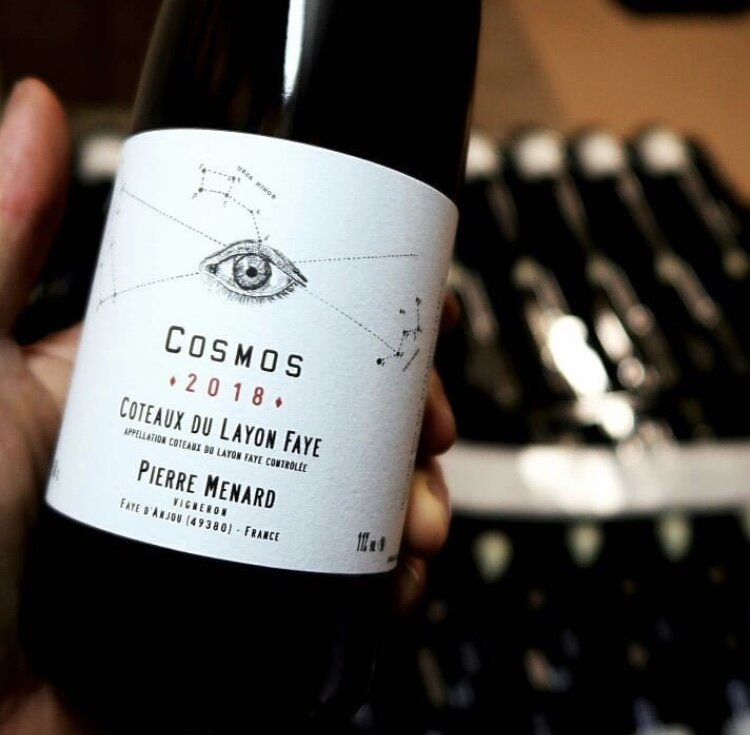
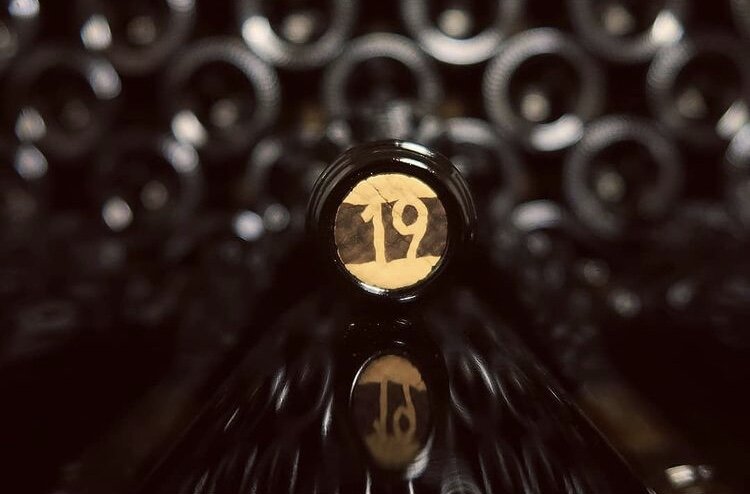
The cuvées of Pierre Ménard are often named after stars or space missions, reflecting the fascination Pierre Ménard holds for the origins of the universe and the light of the heavens. From the crystalline density of the Pierre Ménard Le Quart des Noëls to the flinty, energetic tension of the Pierre Ménard Pluton, each wine is a tactile expression of his craftsmanship. This attention to detail is finalized by Pierre Ménard himself, who designs every label and hand-waxes and numbers every single bottle. Today, Pierre Ménard stands as a definitive voice for the potential of dry Chenin Blanc, proving that the ancient schist slopes of the Layon can produce wines of world-class finesse and longevity under the dedicated hands of Pierre Ménard.

In the Vineyard
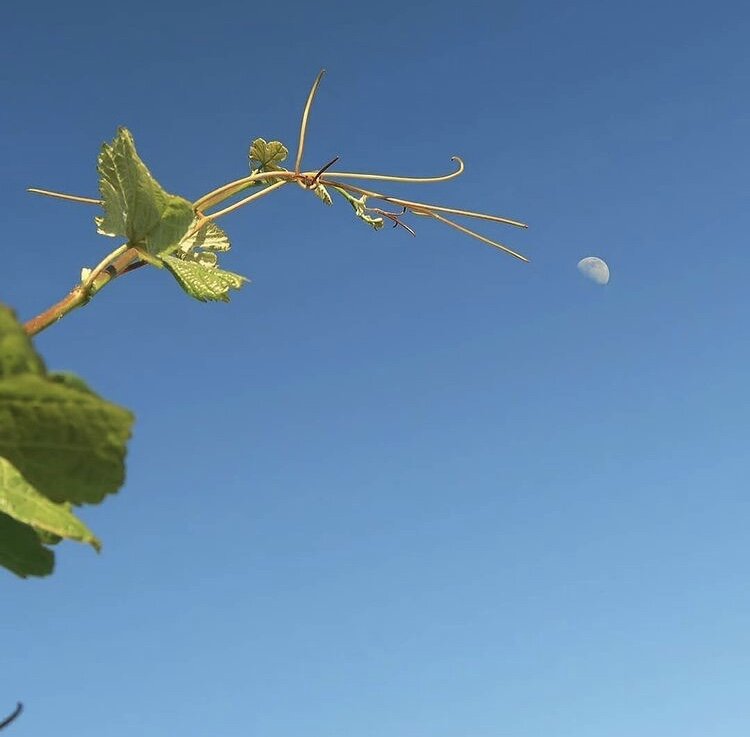
The vineyards are farmed organically and everything is done according to the lunar calendar.
Pierre Ménard uses plant preparations such as herbal teas and decoctions to treat the vines. The soils are ploughed to control grass but also to aerate and help nourish them. Work in the vineyard such as thinning and trimming is done by hand.
Pierre is also now experimenting and is not trimming a few rows of vines in the Clos des Mailles.
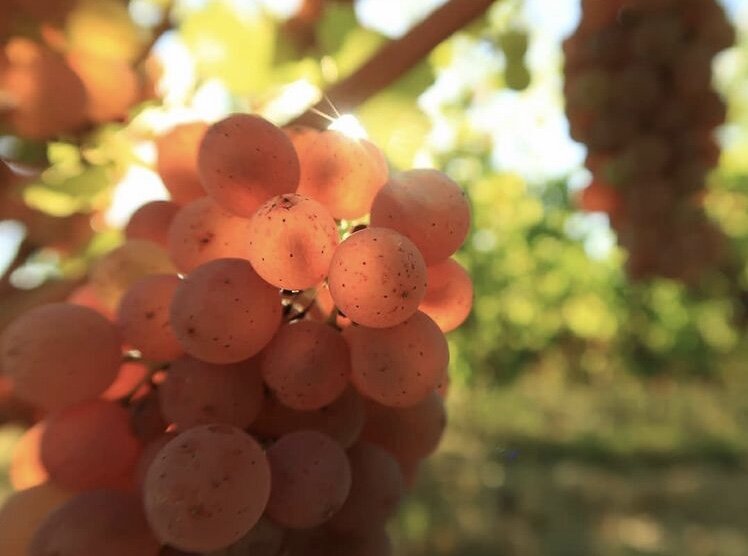
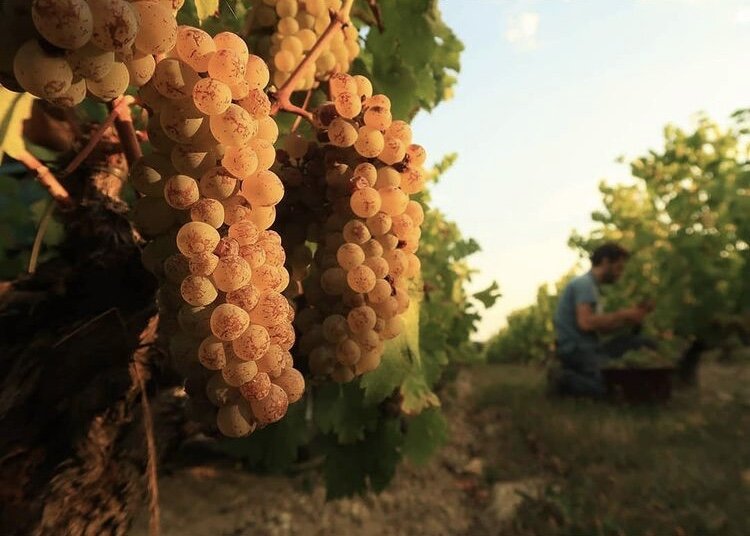
Harvest is carried out manually.

In the Cellar
Pierre Ménard has set up his cellar in an old farmhouse that he partly renovated. The place is used for both the vinification and the aging of the wines.
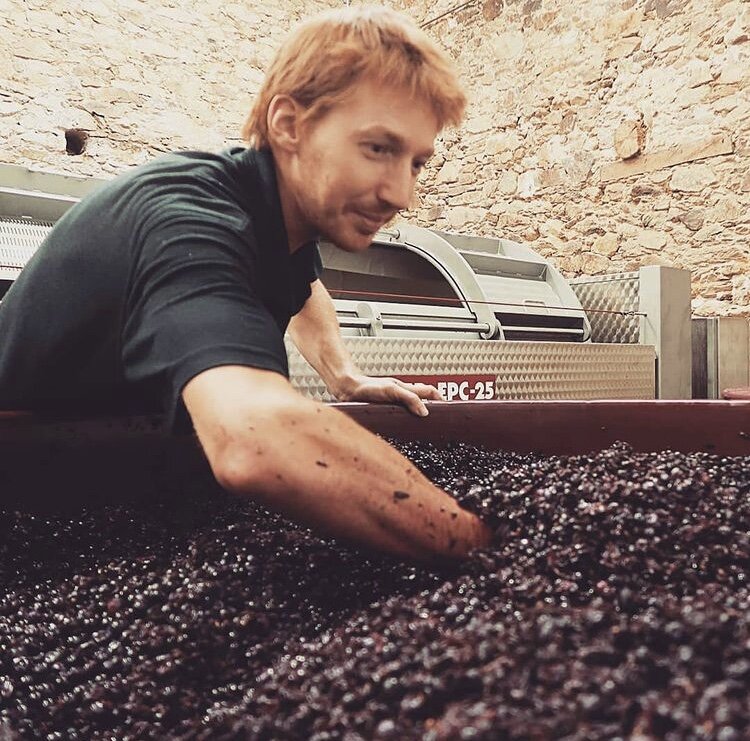
Pierre has a pneumatic press, he likes to perform very long but light pressing programs, sometimes the press runs all night. The juice is then transferred into old barrels to ferment with indigenous yeasts. Pierre does not use new oak at all and prefers using 1 to 3-year-old barrels.
Fermentations are slow and generally last until spring. There is no racking on the whites during the entire aging period. Bottling normally takes place before the next harvest.
Laika
Since 2019, the Sauvignon Blanc from the heritage vines of Clos de la Roche in Faye d’Anjou has been blended with younger vines from the same plot and the Gasnes parcel at the eastern edge of Clos des Mailles, which also includes a small proportion of Sauvignon Gris. These original vines were among the first to introduce the variety to Anjou in the early 1960s. Planted on a schist hilltop—an unusual terroir for a Loire Sauvignon Blanc—this site tends to mask the typical varietal character in favor of a profound schist structure, resulting in a profile that feels almost like a Chenin Blanc.
This plot remains one of the very few still planted on schist bedrock. Since its planting, the 2014 vintage represented the first time this atypical plot was produced entirely on its own—a pilot test conducted without a safety net. Its name serves as a tribute to a certain spirit of adventure and to the extraordinary yet tragic story of Laika, the small dog who became the first living being sent into space. The wine is hand-harvested and gently pressed using a pneumatic press before being fermented and aged in an eclectic mix of vessels, including barrels of varying ages, sandstone amphoras, stainless steel, glass demijohns, and tanks. It reaches 12.5% ABV with a residual sugar of less than 0.5 g/L.
Grape Variety: Sauvignon Blanc & Gris
The "Clau de la Roche" Selection
The "Clau de la Roche" selection comes exclusively from the oldest Sauvignon Blanc vines, which showed exceptional quality during this specific harvest. This micro-cuvée is aged in a single barrel and one sandstone amphora, resulting in a wine of 12.5% ABV and less than 0.5 g/L of residual sugar. The spelling "Clau" is used instead of "Clos" for two specific reasons: first, the term "Clos" is legally restricted for wines outside of an appellation, which a pure Sauvignon Blanc in Anjou cannot claim. Second, the name avoids any confusion with the famous Clos de la Roche Grand Cru in Burgundy.
Grape Variety: Sauvignon Blanc
Clos des Mailles
Clos des Mailles is one of the most prestigious terroirs in Faye d’Anjou, lending its name to this dry Chenin Blanc. The vineyard occupies a magnificent schist slope that extends from the crest overlooking the Layon river down toward the upper reaches of a steep, northwest-facing incline. Situated at the highest altitude of the slope, the vines thrive in remarkably thin soils where the schist bedrock outcrops, interspersed with distinct veins of phtanite—locally referred to as bancs de phtanites.
The character of this wine is drawn from a diverse range of vine ages: half the Chenin Blanc vines are 25 years old, one quarter are younger plantings of seven and eleven years, and the final quarter consists of centenarian vines, some of which are nearly a hundred years old.
The fruit is harvested manually and undergoes a gentle pneumatic pressing. The wine is fermented and aged in a thoughtful selection of vessels to preserve its mineral complexity, including barrels of various ages and sizes, 20hL foudres, sandstone amphorae, and glass demijohns. The resulting wine is 12.5% ABV with a bone-dry finish of less than 1g/L of residual sugar.
Grape Variety: Chenin
Varenne de Chanzé
Located directly adjacent to le Clos des Mailles, the Varenne de Chanzé vineyard offers a striking topographical contrast to its neighbor. While le Clos des Mailles occupies the hill’s crest and the northern slope facing the village of Faye d’Anjou, La Varenne de Chanzé sits across the road, plunging down a steeper southern incline toward the Layon River. This site was once a storied parcel of the historic, now-vanished Château de Chanzé.
The terroir here distinguishes itself through a unique geological composition; though it shares a foundational base of schist, it lacks the phtanites found nearby. Instead, the soil features a subtle presence of altered spilite. This volcanic rock is the secret behind the wine’s character, imparting a refined tension and a distinctive vigor to the palate.
The winemaking process treats this fruit with meticulous care, beginning with a manual harvest and a gentle pneumatic pressing. The wine then undergoes fermentation and aging in a diverse cellar environment that includes barrels of varying ages and sizes, 15hL foudres, and sandstone amphoras. The final expression is a precise, bone-dry wine with an alcohol content of 12.5% ABV and residual sugar levels falling below 1g/L.
Grape Variety: Chenin
Pluton
Pluton represents a prestigious intra-vineyard selection sourced from the very heart of le Clos des Mailles. The vines for this cuvée are perched upon the highest reaches of the slope, where the terroir is defined by a dominance of phtanite over the foundational schist. These exceptionally hard blue rocks, often framed by white quartz, are the ancient companions of schist. The name derives from the Greek phtanô, meaning "I am ahead"—a nod to the rock’s geological precedence and a celestial metaphor for the planet Pluto, which sits at the vanguard of our solar system.
The identity of this wine emerged naturally during the 2016 vintage. While vinifying in small batches, two specific barrels began to distance themselves from the rest of the Clos des Mailles production. These vessels revealed a singular expression of power—one defined not by weight, but by a luminous fusion of finesse, energy, and light.
The technical journey from vine to glass remains focused on purity, utilizing a manual harvest followed by a gentle pneumatic pressing. The wine is fermented and aged in a thoughtful combination of sandstone amphorae and barrels of various ages and sizes. This process results in a sophisticated profile featuring 13% ABV and a precise 2.5g/L of residual sugar.
Grape Variety: Chenin
Les Mailles Jeanne
Named in honor of the plot’s former owner, Les Mailles Jeanne is a soulful expression of the old-vine Chenin Blanc from Clos des Mailles. This specific parcel sits at a boundary position known as Les Mailles, where the topography shifts to create a southern exposure that directly faces the main Clos des Mailles slope. Because this site sits slightly lower in elevation, it acts as a natural basin for descending cold air masses during the spring. To mitigate the frequent risk of frost, these vines are the very last to be pruned each year—a strategic delay that encourages a later bud burst and protects the season's potential.
The combination of this unique microclimate and the resilience of the old vines produces a Chenin Blanc defined by high natural acidity and a remarkably aromatic profile. The wine is crafted with a manual harvest and gentle pneumatic pressing, followed by fermentation and aging in a diverse array of vessels including traditional barrels, stainless steel, sandstone amphoras, and glass demijohns. The result is a precise, high-tension wine with a 12% ABV and a bone-dry finish featuring less than 0.5 g/L of residual sugar.
Grape Variety: Chenin
Quarts de Gastines
Centered on a historic parcel of untrellised, gobelet-trained Chenin Blanc supplemented by a small section of thirteen-year-old vines, Quarts de Gastines runs parallel to Varenne de Chanzé. This plot occupies the southern slope of the hillside, positioned a hundred meters further east and bordering the north-facing Clos des Mailles. The terroir here consists of pure gray-green schist punctuated by trace amounts of phtanite. A defining characteristic of this site is the fascinating genetic diversity of the old vines; a high proportion of "millerandée" clusters—featuring small, widely spaced berries—allows for a singular and highly concentrated ripening process. The wine is crafted through a manual harvest and gentle pneumatic pressing, then fermented and aged in a single barrel, one 600L demi-muid, and glass demijohns, resulting in a 12.5% ABV and a bone-dry finish with less than 1g/L of residual sugar.
Grape Variety: Chenin
Quarts de Noëls
Quart des Noëls marks the very beginning of the estate’s journey in 2013. This intimate vineyard consists of ancient Chenin Blanc vines planted in the early 1920s on a southern-facing slope of sandstone schist and quartz overlooking the Layon River in Faye d'Anjou. The name reflects a local tradition of land division where the "Quarts" historically designated the finest portions of a vineyard; here, Le Quart des Noëls sits contiguous to the renowned Les Noëls. Each vine is a living monument, shaped by a century of meticulous gobelet pruning. These plants represent an ancient massal selection, offering a genetic uniqueness that translates into profound complexity in the glass. Following a hand harvest and gentle pneumatic pressing, the wine is fermented and aged in a combination of demi-muids and barrels of various ages. It reaches an elegant 12.5% ABV with a residual sugar level of less than 1g/L.
Grape Variety: Chenin
Orion Sigma
This red cuvée is a balanced assembly of Cabernet Franc sourced from two distinct parcels in Faye d’Anjou, each contributing a unique dimension to the final blend. The first component comes from ten-year-old vines planted on clay and quartz; these younger vines provide the wine’s structural spine, offering the classic power and varietal expression of the Cabernet. The second component is harvested from venerable vines—at least 70 years old—situated within le Clos des Mailles. Located further down the slope than the Chenin Blanc, these old vines sit on a deeper layer of clay over schist, yielding a wine characterized by floral elegance, lighter color, and remarkable freshness. This clay depth is vital for Cabernet Franc, as the variety requires a more consistent water supply during the summer months than the drought-tolerant Chenin.
The wine's identity is deeply rooted in the cosmos. While previous vintages were named after Betelgeuse—the famous red giant in the constellation of Orion—the 2024 vintage takes the name Sigma Orionis. In the ancient Kingdom of Akkad, Orion was known as Uru-anna, or "the light of the heavens." Sigma Orionis is a multiple star system that appears to the naked eye as a single entity. This serves as a perfect metaphor for the 2024 winemaking approach: a particular intra-berry fermentation where multiple individual fermentations within the fruit eventually unite to create a harmonious, singular whole.
Meticulously hand-harvested, the grapes undergo a ten-day whole-cluster maceration without any mechanical extraction to preserve delicacy. After pressing, the wine is aged in barrels of various ages, resulting in a refined 12% ABV and a completely dry profile at 0 g/L residual sugar.
Grape Variety: Cabernet Franc
Rosetta
This cuvée is an ode to the exploration and experimentation of wine from its very origins: the rosé. History’s earliest wines, crafted by foot-treading various grape types and colors together, were likely rosés with hues that shifted according to the season's harvest and technique. Rosetta is a modern interpretation of this ancient narrative—a dry rosé composed of multiple grape varieties from diverse plots, married to reveal a complexity that transcends its individual components. Because each year is guided by the unique character of the vintage, the blend evolves annually. In 2024, Cabernet Franc takes the lead, supported by Chenin Blanc, Grolleau Noir, and Grolleau Blanc. The name honors the eponymous space mission that sought the origins of life by landing the Philae probe on a distant comet. This celestial voyager offers 12% ABV and a bone-dry finish with 0 g/L residual sugar.
Grape Variety: Cabernet, Grollot Black and White
Saturne Vertige
Saturne Vertige is a semi-sweet Chenin Blanc born from the magic of Botrytis cinerea, or noble rot. This wine represents a collective harvest from all the estate's Chenin parcels, late-picked on October 14th and 15th at approximately 15% potential alcohol. The topography of the Faye d’Anjou hillsides, perched above the Layon River, creates a naturally humid environment where Chenin Blanc and noble rot flourish in tandem. The specific conditions of the vintage—oscillating between damp mornings and dry afternoons—dictate the ultimate concentration of the fruit.
While modern associations with the Layon often lean toward intensely syrupy textures, the glorious history of Anjou was originally built on this semi-sweet style, which fluctuated between off-dry and sweet depending on the year. The shift toward modern "liquoreux" styles only became widespread after the Second World War; this cuvée marks a return to those historic roots. It is a nuanced, balanced expression of a legendary terroir.
Grape Variety: Chenin. Half dry