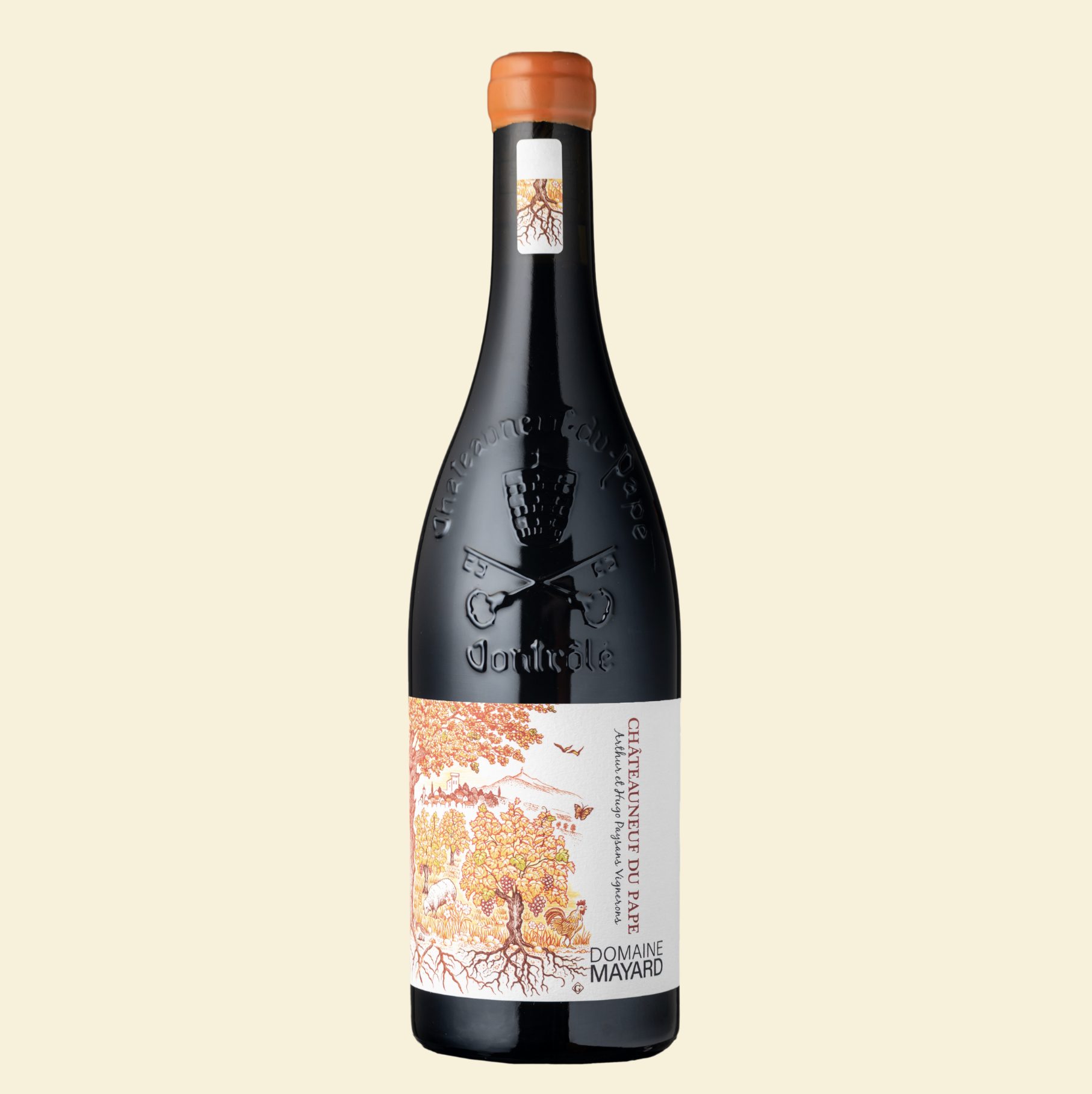
Domaine MAYARD
Chateauneuf du Pape - The new wave is there!
Domaine Mayard – A New Chapter in Châteauneuf-du-Pape’s Living History
Founded in 2021 by brothers Arthur and Hugo Mayard, Domaine Mayard represents the sixth generation of a family deeply rooted in Châteauneuf-du-Pape. The estate was born from the division of the family property, Vignobles Mayard, into two entities: Domaine Mayard, now run by the two brothers, and Clos du Calvaire, managed by their cousin.
When Arthur and Hugo started out, they found themselves both rich and poor—rich in heritage, with around ten hectares of vines averaging seventy years old, but poor in infrastructure. They had no winery, no clients, and no stock. Undeterred, they transformed part of their 16th-century family home, where the Mayard family has lived since 1865, into a winery. Though their ancestors were vignerons for generations, this was the first time the family’s historic walls housed a cellar dedicated to winemaking.
A Vision Grounded in Organic Farming and Longevity
Arthur and Hugo’s approach is guided by respect for the soil and biodiversity. They are certified organic (with some parcels still in conversion), considering themselves true paysans-vignerons. Each autumn, they sow cover crops to help the soil withstand summer heat and retain water, building organic matter and fostering a living ecosystem. The soil is worked minimally to preserve its natural vitality—sometimes even with draft horses, particularly for delicate tasks like under-vine cultivation.
Pruning follows gentle, sap-respecting methods, ensuring vine longevity. They also embrace agroforestry and vitipastoralism, planting fruit trees—pear, almond, cherry—among the vines (around forty per hectare), and encouraging natural interactions between plant and animal life.
The brothers’ long-term goal is clear: to create vines capable of thriving for a century or more, producing wines that reflect balance, finesse, and the energy of life in the soil.
Their vineyard spans multiple terroirs within the appellation, including five hectares in Le Grand Coulet, two in Les Serres, one and a half in La Crau (Grenache planted by their great-grandmother in 1904), and one hectare in Le Pointu planted to Mourvèdre. They also own 3.5 hectares in Lirac and a few parcels in the Côtes-du-Rhône.
From Business and Science to Passionate Winemaking
Arthur’s path began in business school, but his true calling emerged after encounters with young winemakers in Beaune. He completed studies in oenology in Dijon, worked harvests in South Africa, and returned home to create wine with his family. A self-professed wine geek, Arthur devours conferences on sap flow, photosynthesis, soil vitality, and plant energy—“about seven hours a week since 2015,” he says.
Hugo, with a scientific background, complements Arthur’s enthusiasm with grounded, technical understanding acquired through hands-on experience and vineyard work. Together, they have built a small, dynamic team of about ten people—including their brother-in-law Jean and an apprentice—managing eighteen hectares in total.
Gentle, Thoughtful Winemaking
In 2022, they built a new cellar in the center of Châteauneuf-du-Pape, featuring vats of concrete, wood, and stainless steel—each chosen according to plot and vintage. Fermentations are carried out with native yeasts, partially destemmed grapes, and no sulfur during fermentation. Macerations last about forty days, using a gentle extraction process and an Rpulse system that refreshes the cap without opening the vat—minimizing oxidation and sulfur use while saving time and water.
Aging is equally thoughtful: wines spend their first year in large oak tronconic vats for structure and micro-oxygenation, then move to concrete vats to refine texture, and finally to stainless steel before bottling after 18 months. Their Côtes-du-Rhône sees a shorter maceration and aging entirely in concrete.
Arthur emphasizes flexibility: “We’re always experimenting—different vessel sizes, even eggs and alternative shapes. What matters most is being able to change your mind.”
Biodiversity in the Vineyard, Purity in the Glass
The estate’s philosophy extends to massal selections for replanting and carefully chosen rootstocks for long-term resilience. Their plantings include Grenache, Mourvèdre, Cinsault, and Syrah, with Grenache vines aged between 80 and 120 years.
The result is wines that combine ripe fruit and complexity with finesse and precision. The brothers produce just one red and one white Châteauneuf-du-Pape, blending from their best parcels to represent each vintage faithfully. The wines’ silky texture, lifted aromatics, and refined balance have drawn early acclaim—some whisper comparisons to Rayas, thanks to their pure, strawberry-scented style.
Even from their first vintage, Domaine Mayard’s wines were spotted by critics, including La Revue du Vin de France, which named their 2021 Châteauneuf-du-Pape a coup de cœur.
A Promising Future
Domaine Mayard may be new, but it embodies centuries of tradition, rejuvenated by youthful energy and conviction. Arthur and Hugo are not just rebuilding—they are redefining what Châteauneuf-du-Pape can be: wines that are elegant, vibrant, and alive, grounded in the land and crafted with integrity.
A “Petit Rayas,” perhaps—but above all, a testament to resilience, precision, and the spirit of a family whose roots run deep in the Rhône Valley.
Imported exclusively in Hong Kong and Macau by Souveraine Limited
Châteauneuf du Pape Rouge - Domaine MAYARD
Châteauneuf du Pape Blanc - Domaine MAYARD