CANTALAPIEDRA
Rueda
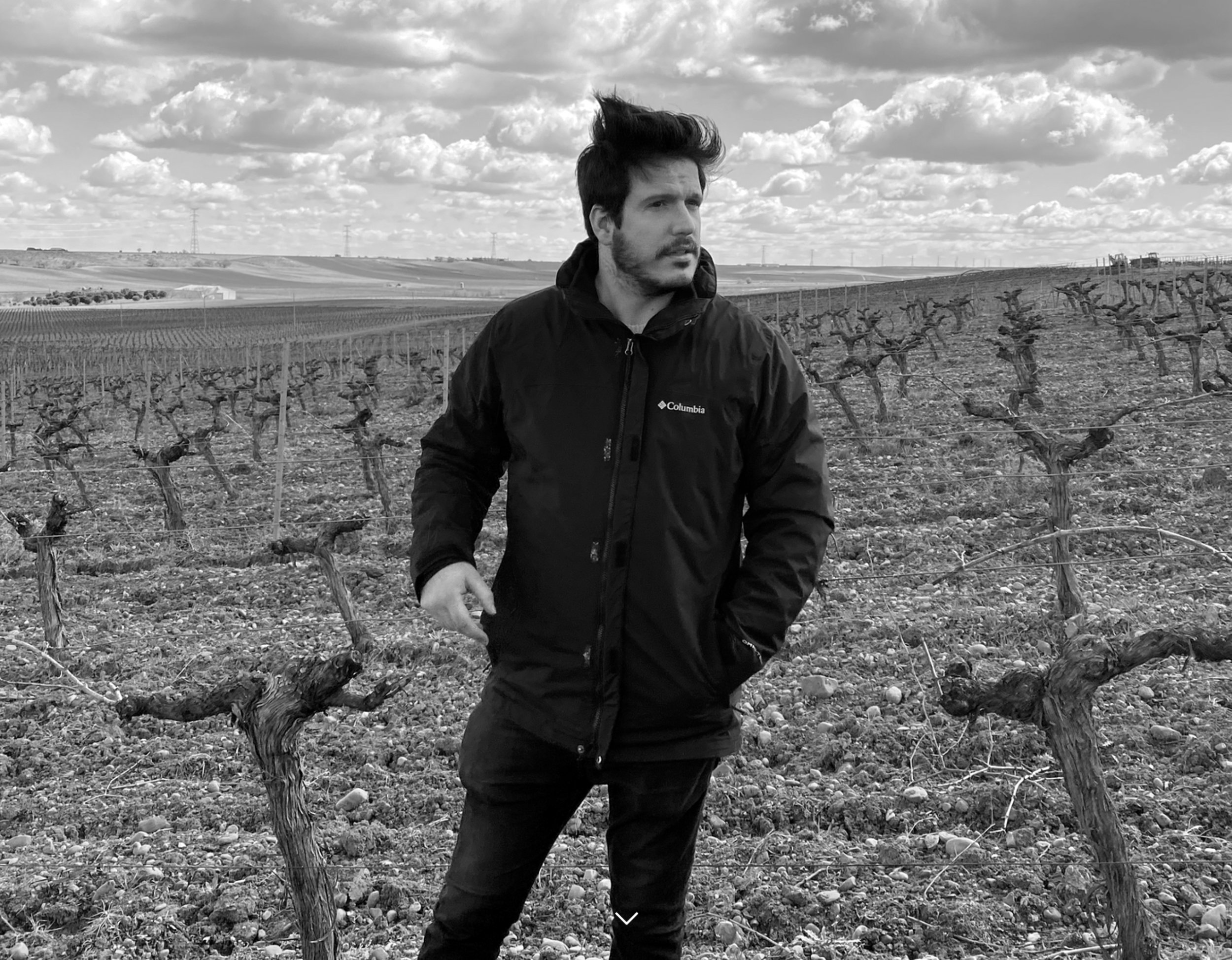
Manuel Cantalapiedra stands as the definitive vanguard of Verdejo, spearheading a movement that seeks to strip away the industrial veneer of the Rueda region to reveal the raw, stony soul of the Castilian high plateau. While the modern history of the area has been defined by high yields and the pursuit of "international" tropical profiles through selected yeasts and heavy filtration, the Cantalapiedra family operates with a diametrically opposed philosophy of non-intervention and deep agricultural respect. Descending from several generations of winegrowers in the legendary village of La Seca, the family’s viticultural foundation was laid in 1949 when patriarch Heliodoro planted his first majuelo at just fifteen years old. Today, under the direction of his grandson Manuel—a trained classical pianist who applies an exacting, artistic rigor to the cellar—the estate focuses on a precise, limited production of roughly 160,000 bottles, ensuring that every drop reflects the specific heritage of their land.
The family’s 21 hectares of Verdejo in La Seca, with vines ranging from ten to forty years of age, form the heart of the project, but Manuel has carefully expanded into a mosaic of rare, ancient plots. These include 1.5 hectares of pre-phylloxera vines planted in 1894 in Hornillos de Eresma, a small plot of eighty-year-old ungrafted vines, and another unique 0.4-hectare vineyard in Alcazarén. His search for terroir has also led to a hectare of ungrafted vines in Matapozuelos and 2.6 hectares of thirty and ninety-five-year-old vines in Toro. Furthermore, the family has integrated 2.5 hectares of Garnacha in Villanueva de Duero, specifically the La Otea plot, and a centenary Garnacha plot in Palacios Rubios. By farming organically without irrigation and utilizing wild yeasts with minimal sulfur, Manuel crafts singular expressions that range from the unfiltered Lirondo to the flor-aged La Vigilia and the high-altitude icons like Alto Las Cuestas and El Parvon.
The resilience of these old vines is best illustrated by how they navigated the extreme 2022 vintage. Despite a brutal summer with temperatures nearing 50°C and low rainfall, Manuel considers it a hallmark of quality; the extreme heat actually caused the plants to "block" and stop accumulating sugar, resulting in some of the lowest alcohol levels the estate has seen alongside a surprisingly productive harvest. Through this artisanal lens, the Cantalapiedras have proved that authentic Verdejo does not need the validation of a D.O. stamp to be considered among the greatest white wines of Spain.
Imported exclusively in Hong Kong and Macau by Souveraine Limited and in Mainland China by MUYI
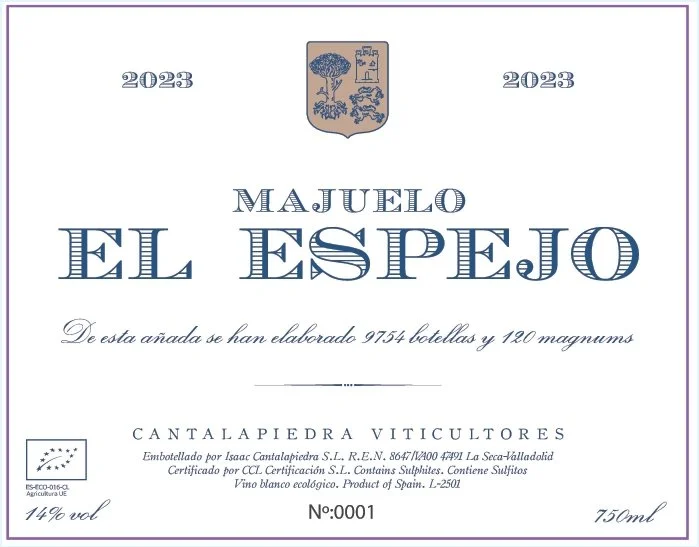
Majuelo El Espejo
Zone: Valle del Duero
Locality: La Seca
Variety: Verdejo
Soil: marl and limestone
Elevation: 750 meters
Age: Planted in 2000
Vineyards:
El Espejo is a singular 3.5-hectare vineyard planted in 1999 by Isaac. The terroir consists of a surface layer of pebbles, sand, and red clay, resting upon a subsoil of marl and limestone at a depth of 50cm. This specific soil composition imparts a distinct minerality and saline character to the wine. The vineyard’s northwest orientation ensures it remains one of our cooler sites, resulting in fruit with exceptional balance and acidity.
Winemaking:
The grapes were hand-harvested and transported in 300kg bins. Upon arrival at the cellar, the whole clusters are lightly crushed and pressed with the stems (whole-cluster pressing). They opted for no settling (debourbage) to retain texture and complexity. Spontaneous fermentation occurred using native yeasts in a combination of French and Austrian oak barrels. The wine underwent full malolactic fermentation and was aged for 23 months in the same barrels. A minimal amount of sulfur was added only once, one month prior to bottling, to ensure stability.
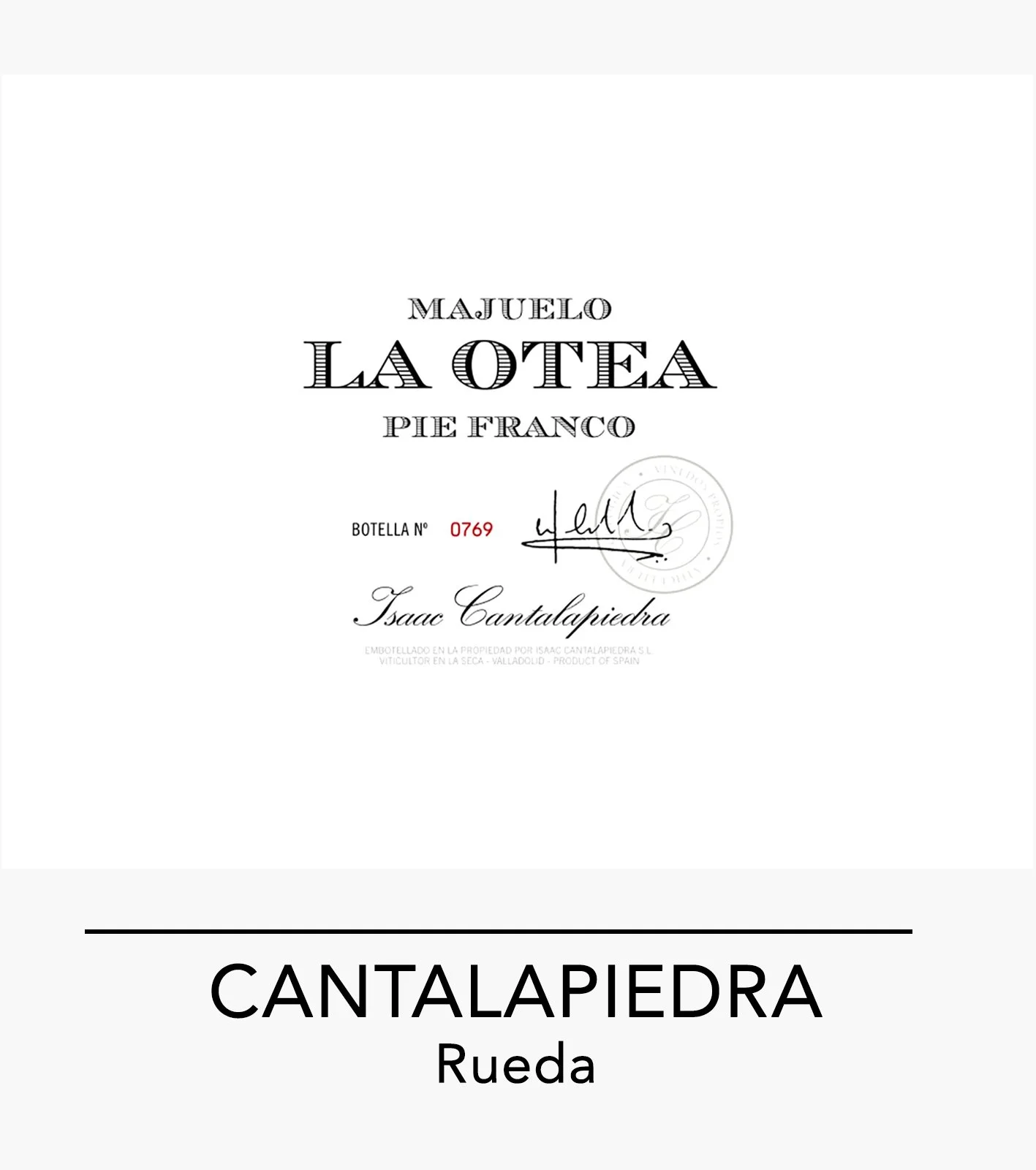
Majuelo La Otea
Zone: Valle del Duero
Locality: Villanueva de Duero and Hornillos de Eresma
Variety: Verdejo
Soil: sand
Elevation: 700 meters
Age: between 132 to 150 years old vines
Production: 2000 bottles
Vineyards:
Three different “majuelos” of ungrafted vines. The original one from Villanueva de Duero, planted more than 150 years ago and another two planted in 1894 in Hornillos de Eresma. Pure sand whereby these vineyards survived phylloxera. Really low yields, around 600kg/ha.
Winemaking:
The grapes are harvested by hand in 300kg bins. Once in the cellar, the clusters are a bit crushed and pressed with the stems. No debourbage. Spontaneous fermentation takes place in French and Austrian oak. Malolactic fermentation also finished. 23 months in the same barrels,, 100% new. Sulphur added one month before bottling.
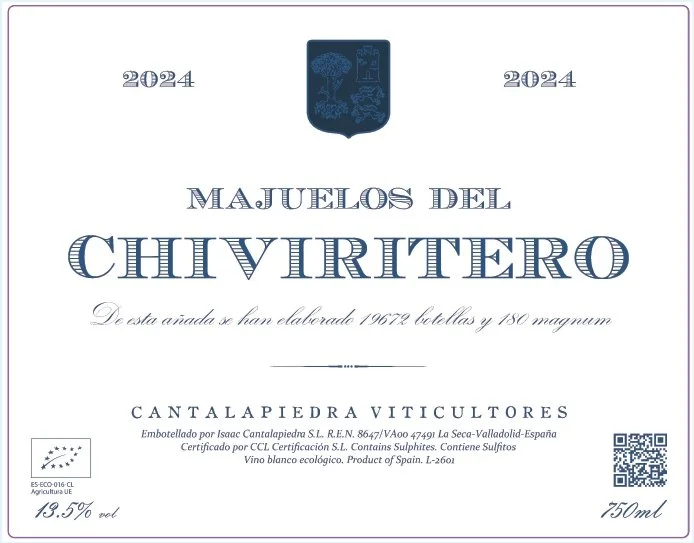
Majuelos Del Chiviritero
Zone: Valle del Duero
Locality: La Seca
Variety: Verdejo
Soil: pebbles red clay and limestone
Elevation: 750 meters
Age: 40-45 years old
Vineyards:
Three different “parajes”, El Chiviritero, Los Picones and Las Escluquillas combined create this singular wine from La Seca. Old vines, from 40 to 45 years and a common characteristic, the high percent of “cantos rodados” (pebbles), the traditional soil where vines have been planted historically. This plus a mix of iron clay and limestone makes a perfect soil for terroir driven wines.
Winemaking: The grapes are harvested by hand in 300kg bins. Once in the cellar, the clusters are a bit crushed and pressed with the stems. No debourbage. Spontaneous fermentation takes place in French and Austrian oak. Malolactic fermentation also finished. 11 months in the same barrels plus another 6-7 months in inox tank. Sulphur added one month before bottling.